Sunday, February 22, 2015
Reflections
I notice that I have not added to my blog since Purim. Actually, a Jewish publishing house based in
Germany (of all places) noticed and asked me to send in samples for possible
publication. I would welcome my work
being introduced to a wider audience, and a foot in the door of commercial
writing would also be welcome.
Probably the most
significant event affecting the Jewish world since Purim 5774 was the war in
Gaza. Israel finally had enough with the
daily rocket fire from Gaza, which they evacuated in 2005 in return for empty
promises quickly repudiated by Hamas once it violently seized power. In addition, Hamas was busy digging tunnels
under the border, with the intention of kidnaping Israeli civilians and
committing other acts of terror. So the
Israelis invaded Gaza, destroyed the tunnels and some of Hamas’s military
assets and returned. Israel seems to do
this every few years, as Hamas quickly rearms and the world does nothing. This
strategy is sometimes referred to as “lawn mower operations” since despite all
the rhetoric on both sides everybody knows that the “grass” will regrow and
Israel will have to enter Gaza later to re-mow it. Every time Israel conducts one of these
operations it is excoriated by the United Nations, the European Union and the
liberal mainstream media in the United States for the heavy collateral damage,
particularly the deaths of many children.
This damage is made inevitable by Hamas’s cynical tactic of placing its
military assets in hospitals and schools full of children, as well as in
private homes whose occupants are not allowed to leave, in order to score
propaganda points with the above-named entities. Israel has always done, and still does more
than any other army on earth to prevent civilian casualties. It even drops flyers and knocks on roofs to
warn civilians of the precise buildings to be attacked, so that civilians may
leave. Those civilians must then choose
between leaving and being killed by Hamas if they are discovered, and staying
and being killed or injured in the military operation. Imagine the United States and its allies
doing that in World War II. I say that
next time Hamas’s shenanigans force Israel to invade, it should leave the lawn
mowers behind, enter with overwhelming force, clean out the vipers’ nests once
and for all and STAY. Show the Arabs as
much mercy as the allies of World War 2 showed the Germans. Destroy any buildings used to attack
Israelis, no matter who else is inside.
If so much as a cap gun goes off from a mosque, level said mosque. Let the world rant and rave all it wants to,
remind the media that they went in because the enemy deliberately targets
Israeli civilians, including children, and that no other country would tolerate
such conditions. The world will condemn
us anyway, so who cares? Rebuild the
settlements that were evacuated; no doubt most of the evacuees will be only too
happy to return to their homes and make the land flourish as it did before the
expulsions. The war sparked outbursts of
anti-Semitism all over western Europe, especially in France. French Jews are still afraid to walk the
streets wearing kippot (skullcaps) and police must be deployed around
synagogues so that Jews can enter and leave peacefully. Many of them decided that they have no future
in France and are leaving for Israel.
They can be helped to build homes in Gaza (city and strip) and
strengthen the Jewish presence. Same
goes for the haredim with their high birthrates and low levels of
education; let them work the soil and justify their existence.
Close on the heels of the
Gaza war came the Yamim Noraim (high holidays) and my own personal
misfortune. On the Sunday morning of
Selihot (penitential prayers recited during the season) I missed a step at
home, fell sideways and twisted my knee.
Somehow I made it to the nearest emergency room, where they took x-rays,
ascertained that I did not break a bone, gave me a brace and a cane and told me
to see an orthopedist. The orthopedist
ordered an MRI and diagnosed a torn anterior cruciate ligament (ACL) and
meniscus (cartilage). I already had two
arthroscopies on the same knee to repair damaged cartilage. So another arthroscopy was done to remove the
damaged cartilage and replace the ligament with tissue from a cadaver. The ACL injury is the same one suffered by
professional football and basketball players; it inevitably sidelines them for
the season and I was promised a similarly long recovery. I am still assiduously doing physical therapy
to rehabilitate the injury.
On the evening before my
accident I attended the Selihot at Kingsway Jewish Center. For several reasons I found it difficult to
relate to. Many of the piyutim
(liturgical poems) are very difficult to understand because they are written in
an abstruse style of medieval Hebrew (unlike the amidot, which anybody
who understands Hebrew can comprehend) and the authors assume a broad knowledge
of Talmud and Midrashim that we moderns do not possess. These poems are valuable, but are better
studied than recited in prayer.
Sefaradim begin Selihot on Rosh Hodesh Elul; perhaps we should
convene starting then to study the more esoteric texts. Many of the poems that we do understand
portray the Jewish people as weak, helpless and hounded, which was true when
they were written but not today, when Barukh Hashem we are witnessing and
participating in the unfolding geula (redemption). One in particular describes two nations,
Sheba and Dedan, which refer to Arab provinces where Jews were living as dhimmis
(second-class citizens), as possessing mighty armies while we are helplessly
subjugated to them. Huh? In my mind’s eye I see the piles of shoes and
burned-out equipment that the Arab armies left for us in June 1967. Sometimes changing the tense of a verb or two
will make the poem consonant with reality on the ground, but sometimes it will
not. In that case I cannot get the words
out of my mouth; doing so would show a crass ingratitude to God, Who is turning
our fortunes around before our very eyes, just as the Prophets told us He
would. Finally, the hazzan
(cantor) pronounces the holam (vav with a dot above it) as if it
was followed by the letter yod, i.e. an “oy” sound. He also, as is customary on the Yamim Noraim,
sprinkles “oy vey,” liberally throughout the text. All of this has an unmanly,
and therefore unwelcome, ring. We are
not an “oy vey” people anymore; we have earned the world’s respect and
admiration for our ability to kick butt.
Neither the pronunciation nor the textual emendation is wrong per se;
I cannot fault a man for following his family minhag (custom), but every
“oy” and “oy vey” grates on my macho ears, and the older I get the more it
grates. I would like to hear the Selihot
and the services on Rosh Hashanah and Yom Kippur from an Israeli hazzan
who pronounces a holam the Israeli way and does not add “oy veys” that
are not found in the printed text. I
would also like the piyutim that describe our past subjugation as if it
were present, and that cannot be fixed, simply passed over. Perhaps people more creative than I am can
compose piyutim expressing our gratitude to God for the unfolding geula;
these can be substituted for the traditional piyutim that, praise God, no
longer have a basis in reality.
On a happier note, I
became a grandfather for the first time when my daughter gave birth to a
daughter on the first day of Shavu’ot 5774. My granddaughter was named Lianna Batya or
Lilliana Beth, but we call her Lily.
We’re all delighted with our cute little girl, but I want her to grow
into a big strong girl, in body, mind and spirit, able to advance the geula. My son got married in Israel on 27 Tevet 5775
to a Sabra girl from Yemenite stock.
They live in Petah Tikva. I and
my wife traveled to Israel for the wedding and sheva brakhot. May it be God’s will that I should soon
return to Israel for a brit milah and pidyon ha-ben, and that we
all merit to see the completion of the geula and, before I get too old
and weak to put one brick on top of another, the rebuilding of the Beit Hamikdash.
Friday, July 02, 2010
In Defense of Summer Vacation
We often hear from education "reformers" and tabloid editorial writers that the summer vacation should be abolished. This proposal is usually accompanied by attacks on "lazy teachers" who get summers off when nobody else does. We are told that summer vacation was originally instituted when America was an agrarian society and children were needed on the farm, summer being the busy season for farmers. Now that few children are needed for farm chores, summer vacation outlived its usefulness. I am not sure how true this is; wasn't harvest season in autumn, when kids return to school? But in any event, summer vacation for students and teachers is a venerable American tradition, and that alone argues for keeping it. We Diaspora Jews keep an extra day of Yom Tov, originally because word of the correct date, based on the sighting of the new moon in Jerusalem, might not have reached outlying areas in time. However, we have had a fixed calendar since the fourth century C.E. There is absolutely no doubt of the correct dates of our holidays. We keep the tradition of the extra day simply because it's a tradition; minhag avoteinu b'yadeinu.
Some traditions (and features of a language) originate for one reason and acquire new meanings with the passage of time. For instance, Shavu'ot originated as an agricultural observance, evolved into a commemmoration of the giving of the Torah (zman mattan Torateinu) and is now, praise God, returning to its agricultural roots. Similarly, summer vacation might have originated to free children for farm work, but it took on new utility that more than justifies holding on to it. It is said that two months without learning causes children to forget everything they learned in the previous year. If so, wouldn't kids working on farms have also forgotten their lessons? Does urbanization ruin kids' brains? The sad fact is that children, regardless of where they live or how they spend their free time, tend to forget what they learned as soon as they take the test, unless it is relevant to their lives or of particular interest. I remembered most of what I learned in science, biology in particular, because that is my passion. I fell in love with biology before I fell in love with my wife - or met her. I forgot most of my Shakespeare, except for some quotable quotes (the fault, dear Brutus. . . .). The summer does not cause children to forget what they learned, but it provides an opportunity for learning of a sort that one cannot get in a classroom. Warm temperatures and long hours of daylight enable children (and adults) to recharge their batteries, and acquire habits of physical activity that are absolutely essential for their good health. Playing with friends builds social skills that are not acquired sitting behind a desk but that are necessary for society to function. And children are free to read what they wish, and experience the ethereal joy of learning not because some adult is forcing them to, not because they have to pass a test, but for the pure joy of learning something new. Looking back to my own childhood, most of our parents were struggling and travel was out of the question. But the public library was our home away from home, and we explored the world in books, some of which were borrowed in June, taken to summer camp and returned in September. Summer camp itself was our first experience away from home, and we learned to solve our own problems instead of running to Mommy. You don't get that kind of learning cooped up in a classroom. Most of the summer's seasonal jobs, such as lifeguarding and manning concession stands in parks and beaches, would go begging if not for students off from school. These students are learning that they have to work for the things they want.
Columnists and editorial writers in tabloids begrudge teachers our summers off - and would have children develop sedentary habits that will condemn them to a lifetime of misery. Face it - how productive are you cooped up indoors when the sun and surf beckon? Are you able to concentrate on work when you have to dress in a manner inappropriate for the summer's heat? Instead of abolishing summer vacation for teachers and students, we ought to experiment with prolonged time off for workers in general during nature's time for fun in the sun.
Some traditions (and features of a language) originate for one reason and acquire new meanings with the passage of time. For instance, Shavu'ot originated as an agricultural observance, evolved into a commemmoration of the giving of the Torah (zman mattan Torateinu) and is now, praise God, returning to its agricultural roots. Similarly, summer vacation might have originated to free children for farm work, but it took on new utility that more than justifies holding on to it. It is said that two months without learning causes children to forget everything they learned in the previous year. If so, wouldn't kids working on farms have also forgotten their lessons? Does urbanization ruin kids' brains? The sad fact is that children, regardless of where they live or how they spend their free time, tend to forget what they learned as soon as they take the test, unless it is relevant to their lives or of particular interest. I remembered most of what I learned in science, biology in particular, because that is my passion. I fell in love with biology before I fell in love with my wife - or met her. I forgot most of my Shakespeare, except for some quotable quotes (the fault, dear Brutus. . . .). The summer does not cause children to forget what they learned, but it provides an opportunity for learning of a sort that one cannot get in a classroom. Warm temperatures and long hours of daylight enable children (and adults) to recharge their batteries, and acquire habits of physical activity that are absolutely essential for their good health. Playing with friends builds social skills that are not acquired sitting behind a desk but that are necessary for society to function. And children are free to read what they wish, and experience the ethereal joy of learning not because some adult is forcing them to, not because they have to pass a test, but for the pure joy of learning something new. Looking back to my own childhood, most of our parents were struggling and travel was out of the question. But the public library was our home away from home, and we explored the world in books, some of which were borrowed in June, taken to summer camp and returned in September. Summer camp itself was our first experience away from home, and we learned to solve our own problems instead of running to Mommy. You don't get that kind of learning cooped up in a classroom. Most of the summer's seasonal jobs, such as lifeguarding and manning concession stands in parks and beaches, would go begging if not for students off from school. These students are learning that they have to work for the things they want.
Columnists and editorial writers in tabloids begrudge teachers our summers off - and would have children develop sedentary habits that will condemn them to a lifetime of misery. Face it - how productive are you cooped up indoors when the sun and surf beckon? Are you able to concentrate on work when you have to dress in a manner inappropriate for the summer's heat? Instead of abolishing summer vacation for teachers and students, we ought to experiment with prolonged time off for workers in general during nature's time for fun in the sun.
Labels: America, education, health, Jerusalem, obesity, science, Shavu'ot, sports, summer
Monday, March 29, 2010
V'Nahafokh Hu
And it was reversed. . . .(Esther 9:1)
No, this is not a leftover Purim shpiel. We are about to celebrate Pesah, zman heruteinu, the season of our freedom. Those of us who daven Nusakh Sefarad will recite Hallel tonight and tomorrow night. I never heard a good explanation of why we say Hallel at night specifically on Pesah, and certainly why Nusakh Sefarad says it and Nusakh Ashkenaz not. So let me venture an explanation at least of the first question. The miracle of Pesah occurred at night. "And it came to pass at midnight, that Hashem struck every firstborn in Egypt. . . ." Rashi comments that Moshe told Pharaoh that the plague would strike about midnight, so that if the Egyptian astronomers erred in the calculation of midnight they would not be able to claim that the plague did not happen as Moshe said it would and therefore it was not Hashem's doing. But the plague actually occurred at the stroke of midnight, as the Jews were eating the sheep, which the Egyptians worshiped as a deity. We are also told that even the firstborn of males were struck down, and in a place as licentious as ancient Egypt only God could know their identity. Thus there could be no room for doubt that the plague was God's doing, and that His people were safe and secure as destruction was abroad in the land in the middle of the night.
Bayamim ha-hem bazman ha-zeh. As it was then, so it is now. We now have, praise God, another holiday when we will recite Hallel at night, a holiday that is also zman heruteinu, Yom Ha'atzmaut. And here too, the miracle occurred at night, for at the stroke of midnight of May 14-15, 1948, 6 Iyar 5708, the Union Jack came down for the last time and the Jewish people assumed among the peoples of the earth the sovereignty to which the laws of nature and of nature's God entitle it, but which it had not exercised since Hasmonean times in the first century B.C.E. That's right, the Sixth of Iyar. That fateful midnight occurred on Shabbat that year, and to prevent desecration of Shabbat the secular, socialist provisional government that had nothing but contempt for everything holy decided to jump the gun and declare the state on Friday afternoon, against the advice of the Americans and all the experts who were telling us that it was not the right time, and that the state, if declared, could not possibly survive. Hence, Yom Ha'atzmaut is celebrated on the Fifth of Iyar, except when the celebration or that of Yom Hazikaron the previous day might engender Sabbath desecration. Such will be the case this year, when to forestall preparations on Shabbat for Yom Hazikaron on Sunday, Yom Hazikaron will be commemmorated on Monday, with Yom Ha'atzmaut on Tuesday, the Sixth of Iyar, when the state actually came into being. I learned this from a booklet sent several years ago my Yeshivat Merkaz Harav.
On the second night of Pesah we begin counting Sefirat ha-Omer, the seven-week period beginning with Pesah and building up to Shavu'ot. Most of us will observe the sefirah, or part of it, as a period of semi-mourning for the disaster that befell us in 135 C.E. when the Roman legions brutally crushed our last hope for independence. Rabbi Akiva and his students figured prominently in that hope, since Rabbi Akiva supported Bar Kokhba's revolt against Rome, and sent his students to fight in Bar Kokhba's army. It is no accident that the Religious Zionist youth movement is named for Rabbi Akiva. And now, here we are with our flag flying proudly over our country, an army that kicks butt, the best flyboys on earth, an economy that is the envy of the Middle East, a flourishing democracy unique in that region, and where are the ancient Romans? Sefirat Ha'omer, before it became a time of mourning, was an occasion for intense joy. It was harvest season, bracketed by the bringing of the omer of barley on 16 Nissan and the two loaves of wheat bread seven weeks later. And now the fertility of our soil, lost during nineteen centuries of foreign occupation, given up on by one commission after another of foreign rulers, was restored as soon as Eretz Yisrael was watered again with Jewish sweat. For this we are to mourn? What is happening here is the reverse of what happens to an avel on Shabbat. Shiva is suspended, the avel dresses for Shabbat and goes to synagogue, publicly he is not showing any signs of mourning, but inwardly he grieves for his departed relative as a mourner. Today's sefirah occasions outward signs of mourning while inside we experience the joy of freedom, of our soil's fertility, of renewed physical strength as we labor on the land and bring forth its fruits.
May we soon see this process of ge'ulah come to its glorious conclusion with the bringing of the Omer and the two loaves of bread amid joyous celebration.
Hag Kasher V'sameah.
No, this is not a leftover Purim shpiel. We are about to celebrate Pesah, zman heruteinu, the season of our freedom. Those of us who daven Nusakh Sefarad will recite Hallel tonight and tomorrow night. I never heard a good explanation of why we say Hallel at night specifically on Pesah, and certainly why Nusakh Sefarad says it and Nusakh Ashkenaz not. So let me venture an explanation at least of the first question. The miracle of Pesah occurred at night. "And it came to pass at midnight, that Hashem struck every firstborn in Egypt. . . ." Rashi comments that Moshe told Pharaoh that the plague would strike about midnight, so that if the Egyptian astronomers erred in the calculation of midnight they would not be able to claim that the plague did not happen as Moshe said it would and therefore it was not Hashem's doing. But the plague actually occurred at the stroke of midnight, as the Jews were eating the sheep, which the Egyptians worshiped as a deity. We are also told that even the firstborn of males were struck down, and in a place as licentious as ancient Egypt only God could know their identity. Thus there could be no room for doubt that the plague was God's doing, and that His people were safe and secure as destruction was abroad in the land in the middle of the night.
Bayamim ha-hem bazman ha-zeh. As it was then, so it is now. We now have, praise God, another holiday when we will recite Hallel at night, a holiday that is also zman heruteinu, Yom Ha'atzmaut. And here too, the miracle occurred at night, for at the stroke of midnight of May 14-15, 1948, 6 Iyar 5708, the Union Jack came down for the last time and the Jewish people assumed among the peoples of the earth the sovereignty to which the laws of nature and of nature's God entitle it, but which it had not exercised since Hasmonean times in the first century B.C.E. That's right, the Sixth of Iyar. That fateful midnight occurred on Shabbat that year, and to prevent desecration of Shabbat the secular, socialist provisional government that had nothing but contempt for everything holy decided to jump the gun and declare the state on Friday afternoon, against the advice of the Americans and all the experts who were telling us that it was not the right time, and that the state, if declared, could not possibly survive. Hence, Yom Ha'atzmaut is celebrated on the Fifth of Iyar, except when the celebration or that of Yom Hazikaron the previous day might engender Sabbath desecration. Such will be the case this year, when to forestall preparations on Shabbat for Yom Hazikaron on Sunday, Yom Hazikaron will be commemmorated on Monday, with Yom Ha'atzmaut on Tuesday, the Sixth of Iyar, when the state actually came into being. I learned this from a booklet sent several years ago my Yeshivat Merkaz Harav.
On the second night of Pesah we begin counting Sefirat ha-Omer, the seven-week period beginning with Pesah and building up to Shavu'ot. Most of us will observe the sefirah, or part of it, as a period of semi-mourning for the disaster that befell us in 135 C.E. when the Roman legions brutally crushed our last hope for independence. Rabbi Akiva and his students figured prominently in that hope, since Rabbi Akiva supported Bar Kokhba's revolt against Rome, and sent his students to fight in Bar Kokhba's army. It is no accident that the Religious Zionist youth movement is named for Rabbi Akiva. And now, here we are with our flag flying proudly over our country, an army that kicks butt, the best flyboys on earth, an economy that is the envy of the Middle East, a flourishing democracy unique in that region, and where are the ancient Romans? Sefirat Ha'omer, before it became a time of mourning, was an occasion for intense joy. It was harvest season, bracketed by the bringing of the omer of barley on 16 Nissan and the two loaves of wheat bread seven weeks later. And now the fertility of our soil, lost during nineteen centuries of foreign occupation, given up on by one commission after another of foreign rulers, was restored as soon as Eretz Yisrael was watered again with Jewish sweat. For this we are to mourn? What is happening here is the reverse of what happens to an avel on Shabbat. Shiva is suspended, the avel dresses for Shabbat and goes to synagogue, publicly he is not showing any signs of mourning, but inwardly he grieves for his departed relative as a mourner. Today's sefirah occasions outward signs of mourning while inside we experience the joy of freedom, of our soil's fertility, of renewed physical strength as we labor on the land and bring forth its fruits.
May we soon see this process of ge'ulah come to its glorious conclusion with the bringing of the Omer and the two loaves of bread amid joyous celebration.
Hag Kasher V'sameah.
Labels: courage, faith, Israel, Pesah, Purim, Shavu'ot, strength, Yom Ha'atzma'ut, Zionism
Wednesday, July 30, 2008
The ghost of summers past
So here we are in my favorite time of year - summer! Long days to enjoy the outdoors. No need to bundle up. Just bask in God's own heat, brought to you free of charge courtesy of the sun. Wherever you go children are playing. On the courts at West 4 Street and Sixth Avenue in Manhattan you always see teenagers engaged in spirited games of basketball. They haven't learned yet to pamper themselves and stay inside with the air conditioner going full blast. Being in my fifties, I sometimes think back on the summers we enjoyed a generation ago. And the key word was "enjoyed." There was a lot less uptightness then than now. Summer was a time to let our hair down. We would walk around and play ball in short pants, and listen to baseball games on "transistor radios" that operated on boxy nine-volt batteries. Air conditioning was still a luxury that only the wealthy could afford, and few of us were wealthy, so we boys stripped down at home to short pants and sleeveless undershirts. We had fans going (a whole lot cheaper to run than air conditioners, and more comfortable too) and windows wide open to let in the breezes. We'd sprinkle ourselves with baby powder (it absorbs sweat), and above all we drank like fish. The women (and I'm writing about Orthodox people here) actually wore sleeveless dresses; they called them "shifts." We boys went to shul and to Bnei Akiva meetings without jackets or ties. To be sure, there was a minority dressed in heavy black clothing, but they were few in number. We called them khnyocks (can anybody tell me the origin of that Yiddish word?) and they didn't dare tell us what to do. And - imagine this - we went mixed swimming at public beaches! My father a"h would close his store Sundays in July and August and, weather permitting, we packed a picnic lunch and went as a family to Manhattan Beach. Other Orthodox families were also there, without a trace of guilt or self-consciousness. I don't know what the books say, but I do remember the praxis. As we got older, Bnei Akiva boys and girls would go on outings to the beach. We met one another. We talked. Physical attraction led to deeper attraction, and no one ever heard of a "shidduch crisis." The incidence of out-of-wedlock pregnancy and venereal disease in our community was as close to zero as such things ever get, which is a good indication that there was little if any illicit (i.e. premarital) sex going on.
And now, some 40 years later? I'm a fit, strong, lean athlete barukh Hashem, and I tolerate the heat just fine, thank you. I have no need for artificial cooling, other than what fans provide. Fat is an insulator; it traps heat. Fat people shipwrecked in cold water are more likely to survive than similarly situated lean people, because they are less likely to become hypothermic. I go to shul without a jacket, except when I know that the air conditioner will be set too high. And if I get cold, I get up and leave. Bad enough I'm cold in winter; I refuse to be cold in summer (see my previous post). I sprinkle myself with baby powder on hot mornings, I drink like a fish and I run around in short pants and a sleeveless top. Once in a while a khnyock will give me the hairy eyeball; I couldn't care less. And I hear people complaining. Mostly fat people; what do they expect? I bring a thermometer to shul on Shabbat, and sometimes the temperature hovers around 70 degrees. What with electricity so expensive, all the guidebooks are telling us to set the thermostat no lower than 78, but our buildings still run the air conditioner as if electricity was free. On Shavu'ot my shul made a Yizkor appeal for the summer upkeep of the shul, i.e. for running the air conditioner. My Yizkor contribution went elsewhere.
Ah, summer. The heat, the sun, the fun. I only wish that it could last forever.
And now, some 40 years later? I'm a fit, strong, lean athlete barukh Hashem, and I tolerate the heat just fine, thank you. I have no need for artificial cooling, other than what fans provide. Fat is an insulator; it traps heat. Fat people shipwrecked in cold water are more likely to survive than similarly situated lean people, because they are less likely to become hypothermic. I go to shul without a jacket, except when I know that the air conditioner will be set too high. And if I get cold, I get up and leave. Bad enough I'm cold in winter; I refuse to be cold in summer (see my previous post). I sprinkle myself with baby powder on hot mornings, I drink like a fish and I run around in short pants and a sleeveless top. Once in a while a khnyock will give me the hairy eyeball; I couldn't care less. And I hear people complaining. Mostly fat people; what do they expect? I bring a thermometer to shul on Shabbat, and sometimes the temperature hovers around 70 degrees. What with electricity so expensive, all the guidebooks are telling us to set the thermostat no lower than 78, but our buildings still run the air conditioner as if electricity was free. On Shavu'ot my shul made a Yizkor appeal for the summer upkeep of the shul, i.e. for running the air conditioner. My Yizkor contribution went elsewhere.
Ah, summer. The heat, the sun, the fun. I only wish that it could last forever.
Labels: air conditioning, basketball, haredim, health, Modern Orthodox, Running, Shavu'ot, sports, strength
Sunday, June 08, 2008
Yom Ha-bikkurim
We are about to celebrate Shavu'ot, and many of us will stay up all night learning Torah. Tomorrow we will hear the Ten Commandments in shul, and refer to the holiday in the Amida as "z'man mattan torateinu" - the time of the giving of the Torah. But if we look in the Torah shebikhtav, there is no mention of Shavu'ot as commemorating the giving of the Torah. Torah was supposed to be as fresh and new every day as the day it was given. And indeed, Shavu'ot is the only holiday that does not have a fixed date on the calendar. It is celebrated seven weeks after the second day of Pesah. Before the adoption of a fixed calendar in the fourth century C.E., each month had either 29 or 30 days depending on when witnesses saw the new moon in Jerusalem; one never knew in advance how many days a month would have. Depending on whether Nisan and Iyar had 29 or 30 days, Shavu'ot could come on the fifth, sixth or seventh of Sivan. The seventh is the day of Mattan Torah only according to R. Yosi, and the fifth is not the day according to anybody!
The holiday is charcacterized in Torah shebikhtav two ways: Shavu'ot, since it occurs seven weeks after Pesah, and Yom Ha-bikkurim, the day when the first of the wheat crop was brought up to the Beit Ha-mikdash and given to the Kohanim. The Mattan Torah angle apparently is post-exilic, a cultural accretion that developed when we no longer had a Beit Mikdash and therefore could not bring Bikkurim.
Shavu'ot is also referred to in the Mishna is Atzeret, a conclusion. Just as Sh'mini Atzeret is the conclusion of Sukkot, Shavu'ot is a conclusion of Pesah. We've all heard, and most of us will hear again tomorrow or the day after, drashot explaining that the purpose of yetzi'at Mitzraim was fulfilled with Mattan Torah seven weeks later. Freedom without law is not freedom but chaos. Without detracting from this explanation, I would like to offer an additional one. As slaves our lives were not our own; we did what our masters told us to do when they told us to do it. Even our food was dictated by our masters, who set a pot of food in front of us the way one would feed animals (see the commentaries on sir ha-basar, the fleshpots of Egypt). The fruits of our labor belonged not to us but to our oppressors. As free men, our lives would be very different. We would have our own country, work its soil, and enjoy its produce. The temptation to attribute our success to our own efforts - kohi v'otzem yadi (see Parshat Eikev) must have been strong. Therefore, we were commanded to take the first fruits of each year's crop, bring it up to the Beit Ha-mikdash, and recite a confession which became the basis of the Haggadah Shel Pesah [see the beginning of Parshat Ki-Tavo]. But the Haggadah stops in the middle, after the miraculous deliverance from Egypt. The remaining verses are not read at the Seder: And He brought us to this place, and He gave us this land flowing with milk and honey. And now I brought the first fruits of the land that You, Hashem, gave me, and he [the one who brings the Bikkurim] shall leave it before Hashem your God and He shall bow down to Hashem your God. And he shall rejoice in all the good that Hashem your God gave you and your house. . . . Shavu'ot becomes the conclusion of Pesah, in that we confim our freedom by thanking Hashem for the privilege of working our soil and eating its produce, and acknowledge that our material success comes from Hashem! Is this the same people that developed a culture of parasitism where working for a living is denigrated and the ideal is to study Torah full time and live off the labor of others? If I had my druthers we would be reading Parshat Ha-bikkurim on Shavu'ot along with the Ten Commandments.
The Bikkurim were to be brought up in a basket, in Hebrew not the usual sal (as in kadursal, basketball), but a tene, a word that sounds Egyptian. A tene held things. It resembles a Latin root meaning "to hold," i.e. tenir in French. In English the word "tennis" originates from the racket that a tennis player holds in his hand, and Cold War defeatists told us that West Berlin was untenable, we couldn't hold onto it. I wonder if the Hebrew-Egyptian and Latin words are related, or if they simply resemble each other by accident. At any rate, in a good year the contents of a tene must have been heavy, and it had to be held in the hand at least the final few hundred meters to the Beit Ha-mikdash. Shavu'ot - Yom Ha-bikkurim was no holiday for Jewish weaklings!
Let us pray that we will soon celebrate Shavu'ot as we were commanded, as normal Jews in a normal country once did, with heavy baskets carried on strong Jewish shoulders to the rebuilt Beit Ha-mikdash, quickly and in our time.
The holiday is charcacterized in Torah shebikhtav two ways: Shavu'ot, since it occurs seven weeks after Pesah, and Yom Ha-bikkurim, the day when the first of the wheat crop was brought up to the Beit Ha-mikdash and given to the Kohanim. The Mattan Torah angle apparently is post-exilic, a cultural accretion that developed when we no longer had a Beit Mikdash and therefore could not bring Bikkurim.
Shavu'ot is also referred to in the Mishna is Atzeret, a conclusion. Just as Sh'mini Atzeret is the conclusion of Sukkot, Shavu'ot is a conclusion of Pesah. We've all heard, and most of us will hear again tomorrow or the day after, drashot explaining that the purpose of yetzi'at Mitzraim was fulfilled with Mattan Torah seven weeks later. Freedom without law is not freedom but chaos. Without detracting from this explanation, I would like to offer an additional one. As slaves our lives were not our own; we did what our masters told us to do when they told us to do it. Even our food was dictated by our masters, who set a pot of food in front of us the way one would feed animals (see the commentaries on sir ha-basar, the fleshpots of Egypt). The fruits of our labor belonged not to us but to our oppressors. As free men, our lives would be very different. We would have our own country, work its soil, and enjoy its produce. The temptation to attribute our success to our own efforts - kohi v'otzem yadi (see Parshat Eikev) must have been strong. Therefore, we were commanded to take the first fruits of each year's crop, bring it up to the Beit Ha-mikdash, and recite a confession which became the basis of the Haggadah Shel Pesah [see the beginning of Parshat Ki-Tavo]. But the Haggadah stops in the middle, after the miraculous deliverance from Egypt. The remaining verses are not read at the Seder: And He brought us to this place, and He gave us this land flowing with milk and honey. And now I brought the first fruits of the land that You, Hashem, gave me, and he [the one who brings the Bikkurim] shall leave it before Hashem your God and He shall bow down to Hashem your God. And he shall rejoice in all the good that Hashem your God gave you and your house. . . . Shavu'ot becomes the conclusion of Pesah, in that we confim our freedom by thanking Hashem for the privilege of working our soil and eating its produce, and acknowledge that our material success comes from Hashem! Is this the same people that developed a culture of parasitism where working for a living is denigrated and the ideal is to study Torah full time and live off the labor of others? If I had my druthers we would be reading Parshat Ha-bikkurim on Shavu'ot along with the Ten Commandments.
The Bikkurim were to be brought up in a basket, in Hebrew not the usual sal (as in kadursal, basketball), but a tene, a word that sounds Egyptian. A tene held things. It resembles a Latin root meaning "to hold," i.e. tenir in French. In English the word "tennis" originates from the racket that a tennis player holds in his hand, and Cold War defeatists told us that West Berlin was untenable, we couldn't hold onto it. I wonder if the Hebrew-Egyptian and Latin words are related, or if they simply resemble each other by accident. At any rate, in a good year the contents of a tene must have been heavy, and it had to be held in the hand at least the final few hundred meters to the Beit Ha-mikdash. Shavu'ot - Yom Ha-bikkurim was no holiday for Jewish weaklings!
Let us pray that we will soon celebrate Shavu'ot as we were commanded, as normal Jews in a normal country once did, with heavy baskets carried on strong Jewish shoulders to the rebuilt Beit Ha-mikdash, quickly and in our time.
Labels: basketball, Israel, Jerusalem, Pesah, Shavu'ot, strength, Tanakh, Zionism
Friday, June 06, 2008
Robert F. Kennedy (1922-1968)
Forty years ago yesterday (June 5), Robert F. (“Bobby”) Kennedy, Senator from New York, brother of the late President John F. Kennedy and himself a candidate for the Democratic Party’s nomination, was shot in the head shortly after winning the California primary. Despite frantic efforts to save him, he succumbed to his wounds shortly after 4:00 A.M. on June 6. New York time. Like his brother before, he was a charismatic leader who captured the imagination of the people. His murder, following closely on that of Martin Luther King two months before, shook the country to its core. Jewish Americans had more reason to mourn: The Senator was outspokenly supportive of Israel and the assassin was a Jordanian-Palestinian, Sirhan Sirhan, who acted on the first anniversary (on the civil calendar) of the outbreak of the Six Day War. He was tried, convicted, sentenced (on Yom Ha-atzmaut) to death in California’s gas chamber, and had his sentence commuted to life in prison when the U.S. Supreme Court invalidated all death sentences up to that time. He remains in prison in California to this day. The only indication he ever gave of his motive was blurted out as he was being captured, “I did it for my country.”
Two days later his body was flown to New York, where he was eulogized at St. Patrick’s Cathedral by his one surviving brother, Massachusetts Senator Edward Kennedy:
My brother need not be idealized, or enlarged in death beyond what he was in life, to be remembered simply as a good and decent man, who saw wrong and tried to right it, saw suffering and tried to heal it, saw war and tried to stop it. Those of us who loved him and who take him to his rest today, pray that what he was to us and what he wished for others will some day come to pass for all the world. As he said many times, in many parts of this nation, to those he touched and who sought to touch him: “Some… see things as they are and say why. I dream things that never were and say why not.”
From New York he was carried by train to Washington, D.C. where he was buried in Arlington National Cemetery close to the grave of his brother, the late President. Thousands upon thousands came to each station to catch a glimpse of his casket. Photojournalist Paul Fusco took extensive pictures of the scenes that show America as it was forty years ago, and his work will be on exhibit at the Danziger Projects in Manhattan through the end of July.
The decade of the 1960s was a time when young people the world over dreamed things that never were and said why not. We dreamed of an end to apartheid, both here and in South Africa, the country that invented the word, and it happened. We dreamed of a world at peace and, for better or worse, brought about the end of the war in Vietnam. We dreamed of social and economic equality for women and, rightly or wrongly, today it is largely a reality. We Jews have a long history of dreaming things that never were and saying why not: At the turn of the previous century Theodore Herzl dreamed of the reestablishment of a Jewish State in Eretz Yisrael, which had not existed for nearly two millennia, and with the grace of God we turned the dream into reality. Eliezer Ben-Yehuda dreamed of the Hebrew language once more being on the lips of children, and that too is a reality, both in Israel and throughout the Diaspora. For nineteen years since the establishment of the State, when the Old City of Jerusalem, Judea and Samaria were in enemy hands, Jews with vision dreamed of our heartland coming under Jewish control, and that too happened, with the Kotel being opened for Jewish worship on Shavu’ot of 5727 (1967 C.E.), exactly one week after its liberation by the Israel Defense Forces in the Six Day War. And then of course there is our ultimate dream, the final liberation of the Jewish people and the perfection of the world with the coming of Mashiah. May that too become reality in our time.
Two days later his body was flown to New York, where he was eulogized at St. Patrick’s Cathedral by his one surviving brother, Massachusetts Senator Edward Kennedy:
My brother need not be idealized, or enlarged in death beyond what he was in life, to be remembered simply as a good and decent man, who saw wrong and tried to right it, saw suffering and tried to heal it, saw war and tried to stop it. Those of us who loved him and who take him to his rest today, pray that what he was to us and what he wished for others will some day come to pass for all the world. As he said many times, in many parts of this nation, to those he touched and who sought to touch him: “Some… see things as they are and say why. I dream things that never were and say why not.”
From New York he was carried by train to Washington, D.C. where he was buried in Arlington National Cemetery close to the grave of his brother, the late President. Thousands upon thousands came to each station to catch a glimpse of his casket. Photojournalist Paul Fusco took extensive pictures of the scenes that show America as it was forty years ago, and his work will be on exhibit at the Danziger Projects in Manhattan through the end of July.
The decade of the 1960s was a time when young people the world over dreamed things that never were and said why not. We dreamed of an end to apartheid, both here and in South Africa, the country that invented the word, and it happened. We dreamed of a world at peace and, for better or worse, brought about the end of the war in Vietnam. We dreamed of social and economic equality for women and, rightly or wrongly, today it is largely a reality. We Jews have a long history of dreaming things that never were and saying why not: At the turn of the previous century Theodore Herzl dreamed of the reestablishment of a Jewish State in Eretz Yisrael, which had not existed for nearly two millennia, and with the grace of God we turned the dream into reality. Eliezer Ben-Yehuda dreamed of the Hebrew language once more being on the lips of children, and that too is a reality, both in Israel and throughout the Diaspora. For nineteen years since the establishment of the State, when the Old City of Jerusalem, Judea and Samaria were in enemy hands, Jews with vision dreamed of our heartland coming under Jewish control, and that too happened, with the Kotel being opened for Jewish worship on Shavu’ot of 5727 (1967 C.E.), exactly one week after its liberation by the Israel Defense Forces in the Six Day War. And then of course there is our ultimate dream, the final liberation of the Jewish people and the perfection of the world with the coming of Mashiah. May that too become reality in our time.
Labels: America, courage, Israel, Jerusalem, Shavu'ot, violence, Yom Ha'atzma'ut, Zionism
Sunday, May 20, 2007
"Mi-yagon l'simha ume-eivel l'yom tov" - From sadness to rejoicing and from mourning to holiday
The sfira is about to conclude with Shavu'ot this week. It is traditionally a time of semi-mourning when we abstain from haricuts, live musical performances and the like, but it wasn't always that way. Before the hurban, this time was one of intense joy as we celebrated the barley and wheat harvests and prepared to bring bikkurim up to the beit hamikdash. Perhaps in keeping with athalta d'geula, the mourning is giving way to joy as we celebrate Yom Ha'atzmaut and Yom Yerushalayim at this time of year.
I first experienced the joy of Yom Ha'atzmaut in 1967 at Yeshivah of Flatbush. I was a freshman and had worked my butt off all year like I never worked before. Coming into the lunch room festooned with flags and banners I knew that it was all worth it (a feeling that would be reinforced a bit later with a 96 on the biology Regents, an event that would set me on a collision course with "gedolim" 40 years later). The next day, joy gave way to apprehension as Egypt, Jordan and Syria prepared to destroy the medina. Soon the Six Day War broke out and, praise God, ended with victory on all fronts and all of Yerushalayim in our hands for the first time since Bar Kokhba. We were all drunk on joy, and that joy combined with the male hormones flooding my 15-year-old body (barukh shelo asani isha) made for a heady brew. Our neighborhood's streets became full of kippot srugot, even on people who had never been observant but who now wished to identify as Jews. At the time, wearing a kippa on Brooklyn's streets still made one a walking target for rowdy Gentiles, but who cared? Jackie Mason notwithstanding, we didn't walk around with chips on our shoulders, but anybody who would dare knock off our kippot would have been in for a butt whipping. Having been a sickly child, I suddenly stopped getting sick. Was it hashgaha pratit or the normal changes of adolescence? I had begun lifting weights several weeks earlier; what might have been a brief infatuation became a lifelong passion for strength and fitness. I would walk with a confident swagger (and walk fast - nobody could keep up with me) that had people saluting as I passed.
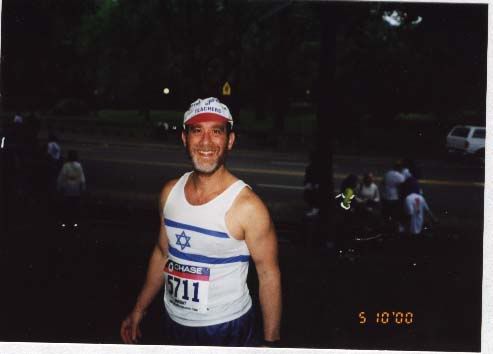
Every year since I would celebrate Yom Ha-atzmaut either with Bnei Akiva or at Yeshivah of Flatbush, until 1991 when I was sitting shiva for my father a"h. It was an experience I wouldn't wish on a dog, made worse by haredi visitors who made no mention of the holiday. I broke into the Yom Tov nigun at shaharit after ha-mahazir sh'khinato l'Tzion, washed for a seuda at lunch time and said shir ha-ma'alot before Birkat Ha-mazon. If I had my druthers Yom Ha-atzmaut would suspend shiva the way Shabbat does. By then I was teaching at Brooklyn's Erasmus Hall H.S., but I promised myself that, work or no work, Yom Ha'atzmaut would never be business as usual. Teaching on that day would be useless anyhow; I'm higher than a kite. I take the day off and return to my alma mater to daven and take part in the festive breakfast with lots of singing and dancing; even now I keep up with dancing high school kids. Being a marathon runner, I do a pirsumei nisa run, donning something that would identify me as Jewish (e.g. a singlet emblazoned with the IDF logo) and running through a neighborhood (Crown Heights this year) where we are not exactly loved. Thank God I came to no harm, but I got bemused looks from hasidim when I'd yell out "hag sameah." Sometime during the day I read Shir Ha-shirim, and I always cry when I get to 5:2, kol dodi dofeq, the tragedy of God knocking and Israel refusing to open the door. Is that not our tragedy since 1967, God knocking and we not opening the door, God putting the pedal to the metal and we timid Jews slamming on the brakes? As the saying goes, you can take the Jew out of the galut but you can't take the galut out of the Jew.
This Wednesday and (in galut) Thursday are Shavu'ot. May we soon celebrate an authentic Shavu'ot with the holiday's special mitzva, bringing bikkurim in heavy baskets on broad Jewish shoulders to the rebuilt Beit Hamikdash.
I first experienced the joy of Yom Ha'atzmaut in 1967 at Yeshivah of Flatbush. I was a freshman and had worked my butt off all year like I never worked before. Coming into the lunch room festooned with flags and banners I knew that it was all worth it (a feeling that would be reinforced a bit later with a 96 on the biology Regents, an event that would set me on a collision course with "gedolim" 40 years later). The next day, joy gave way to apprehension as Egypt, Jordan and Syria prepared to destroy the medina. Soon the Six Day War broke out and, praise God, ended with victory on all fronts and all of Yerushalayim in our hands for the first time since Bar Kokhba. We were all drunk on joy, and that joy combined with the male hormones flooding my 15-year-old body (barukh shelo asani isha) made for a heady brew. Our neighborhood's streets became full of kippot srugot, even on people who had never been observant but who now wished to identify as Jews. At the time, wearing a kippa on Brooklyn's streets still made one a walking target for rowdy Gentiles, but who cared? Jackie Mason notwithstanding, we didn't walk around with chips on our shoulders, but anybody who would dare knock off our kippot would have been in for a butt whipping. Having been a sickly child, I suddenly stopped getting sick. Was it hashgaha pratit or the normal changes of adolescence? I had begun lifting weights several weeks earlier; what might have been a brief infatuation became a lifelong passion for strength and fitness. I would walk with a confident swagger (and walk fast - nobody could keep up with me) that had people saluting as I passed.
Every year since I would celebrate Yom Ha-atzmaut either with Bnei Akiva or at Yeshivah of Flatbush, until 1991 when I was sitting shiva for my father a"h. It was an experience I wouldn't wish on a dog, made worse by haredi visitors who made no mention of the holiday. I broke into the Yom Tov nigun at shaharit after ha-mahazir sh'khinato l'Tzion, washed for a seuda at lunch time and said shir ha-ma'alot before Birkat Ha-mazon. If I had my druthers Yom Ha-atzmaut would suspend shiva the way Shabbat does. By then I was teaching at Brooklyn's Erasmus Hall H.S., but I promised myself that, work or no work, Yom Ha'atzmaut would never be business as usual. Teaching on that day would be useless anyhow; I'm higher than a kite. I take the day off and return to my alma mater to daven and take part in the festive breakfast with lots of singing and dancing; even now I keep up with dancing high school kids. Being a marathon runner, I do a pirsumei nisa run, donning something that would identify me as Jewish (e.g. a singlet emblazoned with the IDF logo) and running through a neighborhood (Crown Heights this year) where we are not exactly loved. Thank God I came to no harm, but I got bemused looks from hasidim when I'd yell out "hag sameah." Sometime during the day I read Shir Ha-shirim, and I always cry when I get to 5:2, kol dodi dofeq, the tragedy of God knocking and Israel refusing to open the door. Is that not our tragedy since 1967, God knocking and we not opening the door, God putting the pedal to the metal and we timid Jews slamming on the brakes? As the saying goes, you can take the Jew out of the galut but you can't take the galut out of the Jew.
This Wednesday and (in galut) Thursday are Shavu'ot. May we soon celebrate an authentic Shavu'ot with the holiday's special mitzva, bringing bikkurim in heavy baskets on broad Jewish shoulders to the rebuilt Beit Hamikdash.
Labels: Israel, Shavu'ot, Yom Ha'atzma'ut, Yom Yerushalayim