Wednesday, June 29, 2016

Shout It Out


   We just finished the roller coaster ride of joy and sorrow that is the counting of the Omer.  During that time we read Parshat B’hukotai (Lev. 26:3 – 27: 34) with its promises of abundant blessings if we are faithful to the Torah and dire warnings of terrible curses if we are not.  In 1945, as World War II was drawing to a close and German concentration camps were being liberated by the British and Americans (the ones further east were liberated by the Soviets), this section was read wherever possible.  The next year, with all of Europe liberated, many Jewish ex-inmates were housed in Displaced Person (DP) camps, where they were provided with food, medical care and housing fit for human habitation and, we all hoped, enabled to start new lives elsewhere.  It was a time of joy and hope; as Jews we refused to wallow in victimhood.  Men and women met and married; babies were born.  A new edition of the Vilna Talmud was published.  Religious services were held, and about a year after liberation Parshat B’hukotai was read again.  Traditionally, the reader reads the curses sotto voce, in a soft voice, indicating their extreme unpleasantness.  But this time, as I learned in the Zionist youth movement Bnei Akiva, the reader shouted the curses out.  When asked why he departed from the custom, the reader answered that all the curses that he read were fulfilled during the war, and now he shouted them out as a challenge to God.  As You brought about the curses, now fulfill the second part.  Bring on the blessings.  אל תפל דבר מכל אשר דברת.  Let not one word fail from all that You have spoken (cf. Esther 6:10).  And three years later, almost to the day, the State of Israel came into being and fulfilled the blessings beyond our wildest dreams.  Our land and people were restored to their former greatness and then some, agriculturally and militarily.  More Torah is being studied there than ever before in our history:  כי מציון תצא  תורה – out of Zion shall come forth Torah (Is. 2:3).  Israel is the start-up nation where all manner of new hi-tech inventions are innovated, and from there they emanate as blessings to all humanity in medicine, agriculture and almost every other field of human endeavor (cf. Gen. 12: 2-3).  May our state, the work of God from the beginning, grow from strength to strength and culminate in the building of the third Beit Mikdash (Holy Temple in Jerusalem) and the finalization of the ge’ula (Redemption)  speedily and in our time.

Labels: , , , , , , ,

Sunday, May 20, 2012

Letter to the World From Jerusalem


   Today is Yom Yerushalayim.  45 years ago Israeli soldiers with God's help liberated the Old City and placed it under Jewish sovereignty for the first time in nearly 2000 years.  I am posting an "open letter to the world from Jerusalem" written two years later.  Like Jerusalem itself, it is as timely today as it was in the beginning.

Letter to the World From Jerusalem
by Eliezer Ben Yisrael (Stanley Goldfoot)

I am not a creature from another planet, as you seem to believe.

I am a Jerusalemite - like yourselves, a man of flesh and blood.

I am a citizen of my city, an integral part of my people.

I have a few things to get off my chest. Because I am not a diplomat, I do not have to mince words. I do not have to please you or even persuade you. I owe you nothing.

You did not build this city, you did not live in it, you did not defend it when they came to destroy it.

And we will be damned if we will let you take it away.

There was a Jerusalem before there was a New York.

When Berlin, Moscow, London, and Paris were miasmal forest and swamp, there was a thriving Jewish community here. It gave something to the world which you nations have rejected ever since you established yourselves - a humane moral code.

Here the prophets walked, their words flashing like forked lightning.

Here a people who wanted nothing more than to be left alone, fought off waves of heathen would-be conquerors, bled and died on the battlements, hurled themselves into the flames of their burning Temple rather than surrender, and when finally overwhelmed by sheer numbers and led away into captivity, swore that before they forgot Jerusalem, they would see their tongues cleave to their palates, their right arms wither.

For two pain-filled millennia, while we were your unwelcome guests, we prayed daily to return to this city. Three times a day we petitioned the Almighty: "Gather us from the four corners of the world, bring us upright to our land, return in mercy to Jerusalem, Thy city, and dwell in it as Thou promised." On every Yom Kippur and Passover, we fervently voiced the hope that next year would find us in Jerusalem.

Your inquisitions, pogroms, expulsions, the ghettos into which you jammed us, your forced baptisms, your quota systems, your genteel anti-Semitism, and the final unspeakable horror, the holocaust (and worse, your terrifying disinterest in it)- all these have not broken us. They may have sapped what little moral strength you still possessed, but they forged us into steel. Do you think that you can break us now after all we have been through? Do you really believe that after Dachau and Auschwitz we are frightened by your threats of blockades and sanctions?

We have been to Hell and back- a Hell of your making. What more could you possibly have in your arsenal that could scare us?

I have watched this city bombarded twice by nations calling themselves civilized.

In 1948, while you looked on apathetically, I saw women and children blown to smithereens, after we agreed to your request to internationalize the city. It was a deadly combination that did the job - British officers, Arab gunners, and American-made cannon.

And then the savage sacking of the Old City-the willful slaughter, the wanton destruction of every synagogue and religious school, the desecration of Jewish cemeteries, the sale by a ghoulish government of tombstones for building materials, for poultry runs, army camps, even latrines.

And you never said a word.

You never breathed the slightest protest when the Jordanians shut off the holiest of our places, the Western Wall, in violation of the pledges they had made after the war- a war they waged, incidentally, against the decision of the UN. Not a murmur came from you whenever the legionnaires in their spiked helmets casually opened fire upon our citizens from behind the walls.

Your hearts bled when Berlin came under siege. You rushed your airlift "to save the gallant Berliners". But you did not send one ounce of food when Jews starved in besieged Jerusalem. You thundered against the wall which the East Germans ran through the middle of the German capital- but not one peep out of you about that other wall, the one that tore through the heart of Jerusalem.

And when that same thing happened 20 years later, and the Arabs unleashed a savage, unprovoked bombardment of the Holy City again, did any of you do anything?

The only time you came to life was when the city was at last reunited. Then you wrung your hands and spoke loftily of "justice" and need for the "Christian" quality of turning the other cheek.The truth - and you know it deep inside your gut - you would prefer the city to be destroyed rather than have it governed by Jews.

No matter how diplomatically you phrase it, the age old prejudices seep out of every word.

If our return to the city has tied your theology in knots, perhaps you had better reexamine your catechisms. After what we have been through, we are not passively going to accommodate ourselves to the twisted idea that we are to suffer eternal homelessness until we accept your savior.

For the first time since the year 70, there is now complete religious freedom for all in Jerusalem. For the first time since the Romans put a torch to the Temple, everyone has equal rights (You prefer to have some more equal than others.) We loathe the sword- but it was you who forced us to take it up. We crave peace, but we are not going back to the peace of 1948 as you would like us to.

We are home. It has a lovely sound for a nation you have willed to wander over the face of the globe. We are not leaving. We are redeeming the pledge made by our forefathers: Jerusalem is being rebuilt. "Next year" and the year after, and after, and after, until the end of time- "in Jerusalem"!

Labels: , , ,

Wednesday, May 16, 2012

Palestine is Desolate


   In this month of mourning for the defeat and murderous persecutions at the hands of the Romans in 135C.E., and of rejoicing for the miracles experienced in our own time, it is instructive to go back 145 years, to Mark Twain’s Innocents Abroad, first published in 1867.  Mark Twain’s book is based on  a tour of Europe and the Middle East that he took with some friends.  These quotes are taken from the Modern Library Edition, New York, 2003: 


Galilee:  (p.358) – There is not a solitary village throughout its whole extent – not for thirty miles in either direction. There are two or three small clusters of Bedouin tents, but not a single permanent habitation.  One may ride ten miles, hereabouts, and not see ten human beings.


Tiberias (p.374) – They say that the long-nosed, lanky, dyspeptic-looking body-snatchers, with the indescribable hats on, and a long curl dangling down in front of each ear, are the old, familiar self-righteous Pharisees we read of in the Scriptures.  Verily, they look it.  Judging merely by their general style, and without other evidence, one might easily suspect that self-righteousness was their specialty. 


Entering Jerusalem (p.418) – Rags, wretchedness, poverty and dirt, those signs and symbols that indicate the presence of Moslem rule more surely than the crescent-flag itself, abound.  Lepers, cripples, the blind, and the idiotic, assail you on every hand. . . .Jerusalem is mournful, and dreary, and lifeless.  I would not desire to live there.


Summarizing (p.456) – Of all the lands there are for dismal scenery, I think Palestine must be the prince.  The hills are barren. . . .The valleys are unsightly deserts fringed with a feeble vegetation that has an expression about it of being sorrowful and despondent.  . . .It is a hopeless, dreary, heart-broken land.. . . .Palestine sits in sackcloth and ashes.  Over it broods the spell of a curse that has withered its fields and fettered its energies.. . .Renowned Jerusalem itself, the stateliest name in history, has lost all its ancient grandeur, and is become a pauper village. . . .Palestine is desolate and unlovely. . . .Palestine is no more of this work-day world.  It is sacred to poetry and tradition – it is dream-land. 


   Tiberias’s self-righteous Pharisees?  Mark Twain is hardly the first Christian author to so egregiously misuse the word “Pharisee,” but that could be the topic of another post.  Dyspeptic-looking?  Well, at least they were not the fat slobs walking around Brooklyn today.  Transplanted to Meah She’arim or Beit Shemesh, they would fit right in with today’s haredim, many of whom are self-righteous and worse.  And these were the only Jews Mark Twain saw there, more’s the pity.  

   If he had traveled 20-30 years later, he would already have seen a different kind of Jew, strong broad-shouldered men (and more than a few women) laboring on the holy land, the land whose productivity Turks and British alike despaired of, but that yielded when watered with holy Jewish sweat.  He saw Palestine, a barren land. as lonely and desolate as Jeremiah describes in Megillat Eicha (the Scroll of Lamentations).  He saw a land that had not enjoyed political independence since 63 B.C.E., a land empty of people, since the much-ballyhooed “Palestinian Arabs” did not come until after 1917, i.e. after Jewish immigrants began to create living conditions conducive to human habitation.  

   If Mark Twain were to wake up today, he would see a modern prosperous independent nation, a Jerusalem steeped in holiness with more Torah learning going on than at any time in its long history, and simultaneously a living, breathing capital of a living, breathing country.  He would see (ro’im et ha-kolot) our ancient language once again on the lips of children, and on the lips of drill sergeants barking out their orders.  He would see the hustle and bustle of Tel-Aviv, and a concentration of brain power that gave the world countless advances in agriculture, high-tech and all fields of human endeavor.  I think he would marvel out loud, as many others have:  Are these people Jews?  Where did these come from?  Who gave birth to them?  (See Isaiah 49:21) 

   Palestine is desolate.  Even today, the areas controlled by the “Palestinian Authority” are barren.  Their people live in poverty and backwardness.  Men kill their own daughters and sisters for “dishonoring the family.”  Their leaders’ corruption and thievery make the worst Israeli and American politicians look like Rebecca of Sunnybrook Farm.  Their children are taught not to pursue knowledge but to glorify and emulate suicide bombers, thus passing ignorance and backwardness to the next generation. 

   Palestine is desolate.  But Israel thrives and, please God, will continue to thrive until the unfolding ge’ula reaches its glorious conclusion.


Labels: , , , , , , , , , ,

Tuesday, February 21, 2012

Israel at a Crossroads

Shalom from Deerfield Beach, Florida. I'm visiting my mom; she's holding her own, thank God. The weather's gorgeous. I can run in my summer clothing. If I lived here all year I wouldn't have to be on antidepressants. But I'd still be angry as hell over what's going on in Israel. When we speak of Israel at a crossroads and facing an existential threat, we usually refer to outside military threats. We have enough of those, but now we have an existential threat from within. This is nothing new either; 2000 years ago instead of coming together to fight the Romans we fought one another and played right into the Romans' hands.
Today's threat from within is centered in Beit Shemesh and certain neighborhoods (Jewish, not Arab) in Jerusalem. Certain Jewish fanatics who call themselves Sikrikim, after the ultra-Zealots in Roman times who carried short knives (Sicarii) concealed in their cloaks (talk about cloak-and-dagger) took it on themselves to curse, spit and throw objects at little girls leaving a religious Zionist school in Beit Shemesh. They say the girls are not dressed modestly; they are, but not to the standards of the Sikrikim. And if they weren't, would that give anybody the right to physically and verbally assault them? Not in any free country. The fanatics moved to Beit Shemesh from Jerusalem when the latter became too crowded and /or too expensive. Beit Shemesh was already populated mostly by English-speaking immigrants of a more Zionist bent, Americans who bring American values when they make aliya, but that doesn't stop the "religious" hooligans from doing in Beit Shemesh what they did in Me'ah She'arim. They also try to enforce gender segregation on public buses and make men and women walk on opposite sides of public streets. The situation is such that the United States State Department issued a formal advisory that American citizens shouldn't visit "ultra-Orthodox" neighborhoods in "immodest dress." The advisory does not define what constitutes immodest dress; I suppose one can ask the eight-year-old girl who was spat upon and called a whore. How's that for a hillul Hashem? Now the police promised to arrest anyone harassing schoolchildren and the situation is quiet, but how long will that last?
True to form, the larger haredi community tries to pass this latest outrage off as the act of an irresponsible lunatic fringe. That may be true, but the silence from the "responsible" haredi Rabbinic leadership is deafening. Not a peep out of them. Imagine if the Aurbachs, Elyashivs, Kanievskies, et. al. were to go to Beit Shemesh and escort those girls to and from school. That would show the Sikrikim and everybody else that the assaults and invective against Jewish children are anti-Torah and will not be tolerated. Imagine if wall posters went up in all the affected areas that anybody engaged in such despicable behavior should be ostracized, boycotted, refused kibbudim in synagogues and such. Those greybeards were quick enough to put up posters condemning Rabbi Slifkin.
And whatever happened to men's obligation to protect women? The mothers of the assaulted children went to the media and let the outrages be known. Where were their fathers and brothers? If any strong healthy men would have given the fanatics what-for, that would have been the end of it. Those leeches and bloodsuckers are brave enough to beat up women and children, but when it comes to defending the country from its enemies, nobody's home. When it comes to honest work to support their families, ditto.
Israelis must decide, before too many suns set, what kind of a country they wish to have. Do they want a liberal democracy like the United States or do they want a theocratic stink hole like Iran? Do they want to be part of the open world or the closed world? Ben Gurion in his day chose loud and clear. Israel would be part of the open world, and all Israelis except for a handful of religious nuts agreed. Now the nuts are numerous enough to reopen the question. If we choose a theocratic stink hole, we cannot expect the unstinting and bipartisan support of Congress to the tune of millions of dollars when the United States is running a monumental deficit. Will the U.S. support a country where its female Secretary of State might theoretically be told to sit in the back of the bus? I think not.
I also think that a majority of Israelis will still throw in their lot with democracy and the West. What is needed is for the Religious Zionist community to loudly and clearly reject the haredi authority figures and make common cause with the secularists to keep Israel democratic and free. Then we will have a secular-and -Religious-Zionist majority in the Knesset. Draft exemptions for haredim will be sharply curtailed, as will subsidies for yeshivot that teach sedition and for able-bodied men who choose not to work. The police will enforce the law without fear, favor or corruption, and lunatic fringes will be relegated to the fringe, as they should be.

Labels: , , , , , , , , , , , , , , ,

Tuesday, January 04, 2011

Point - Counterpoint

In a post written on the occasion of R. Meir Kahane's yahrzeit, I referred to an essay written by an American student in an Israeli yeshiva describing his physical breakdown while supposedly growing in Torah scholarship. I just became aware of another student, a recent graduate of my alma mater Yeshivah of Flatbush, who is studying in an Israeli yeshiva and at the same time training for the first full 42-kilometer marathon to be held in Jerusalem this coming spring. Not only is he training, he is spreading the gospel (deep breath, all it means is "good news") of fitness to his buddies and getting them to train. And they are not sacrificing their learning either.


Click here.


Kol Hakavod to all of them. They are real authentic Jews learning - and living - the real Torah. R. Kahane would be proud. And for a shot of fluid and carbs when they are drenched with holy Jewish sweat, they should try this:


It's the real thing!

Labels: , , , , , , ,

Wednesday, December 08, 2010

Hanukkah - A missed opportunity and seized opportunities

We are about to conclude the eight-day festival of Hanukkah, commemmorating the victory of the Hasmoneans over the Seleucid empire in the second century B.C.E. Can anybody think of any other culture that commemmorates events that happened so long ago? It is said that Napoleon, having stumbled into a synagogue on Tisha B'Av and seen Jews crying, asked why. When he was told that they were crying over a temple that was destroyed some 1700 years ago, he answered that a people that still cries over a temple destroyed 1700 years ago will certainly live to see its restoration. From his mouth to God's ears.

We often overlook that the Hasmonean struggle was against Jewish traitors - Hellenists - even more than against the Greeks themselves. It began when Matityahu (Matthew in English) ran up to a pagan altar and killed a Jew who was about to sacrifice a pig to a Greek idol. The Greeks forbade brit milah, circumcision, and Maccabean soldiers forcibly circumcised the sons of Jews who may not have desired to have their sons circumcized. If the Hasmoneans had not persisted so doggedly, the Jewish people would have been swallowed by Hellenistic culture as were all other conquered peoples, Christianity would not have arisen, and the world would be a different place.

But when I step back and try to see those events objectively, I wonder if I myself and many other observant Jews who share my outlook would not have been Hellenists ourselves. Not all Hellenists were idolaters; many were attracted to the more attractive elements of the culture - art, music, theater, athletics and so on. The fact is that Jews and Greeks got along quite well under Alexander the Great (to this day we name baby boys Alexander), the Ptolemies and even the early Seleucids. We paid taxes and practiced our religion unmolested. Many Jews studied the Greek language and used it to communicate with the rest of society, while using Hebrew and Aramaic to communicate with one another. True, we had to coexist with out-and-out avoda zara (idolatry), but until the rise of Christianity we always have. And we were unable to participate in Greek sports because their athletes competed naked ("gymnasium" is derived from gymnos, the Greek word for naked) and circumcized men were not allowed to compete. Many Hellenized Jews had themselves painfully decircumcized in order to participate; our sources strongly condemn those who "abrogate the covenant of our father Abraham" (mefer brito shel Avraham Avinu). Now, imagine if Antiochus IV Epiphanes ("God revealed") would have been more tolerant and less chauvinistic. Jews and Greeks would have interacted more, and each would have absorbed whatever was most beautiful and uplifting in the other's culture. Jewish youth would have competed in Greek sporting events, but with clothes and without sacrificing to idols. Intelligent Greeks, who were beginning to see that the world was an orderly place governed by natural law, would have questioned their belief in a panoply of gods forever warring with one another; the Greeks made their gods in their own image instead of the other way around. Antiochus missed a terrific opportunity to achieve in the second centure B.C.E. the synthesis that was achieved in the nineteenth and twentieth centuries C.E. Rav Kook taught that it was desirable to "bring the beauty of Yefet [the ancestor of the Greeks] into the tents of Shem." But then we wouldn't have the latkes, the sufganiot and the dreidels.

Battle was joined, initially to restore the religious autonomy that we enjoyed under the Persians and the Greeks up until Antiochus. Against all odds, the Maccabees defeated both the Greeks and their Jewish collaborators and were able to rededicate the Temple three years after the Greeks defiled it. But the Greeks were still ensconced in the Akra fort in or near Jerusalem, and in their many pagan cities (polises) throughout Judah. The Hasmoneans realized that as long as the Greeks held the high ground they would be a constant threat, militarily and culturally. They saw an opportunity to throw them out of the country altogether and they seized it, restoring Jewish political independence for the first time since the fall of the First Temple in 586 B.C.E. The later Hasmonean rulers adopted Greek names (Hyrcanus, Aristobolus and such) and Greek customs, and became Tzedokim (Sadducees), so it might be argued that the Hellenists won after all, but we enjoyed an unparalleled flowering of Torah scholarship as well as material prosperity. As Mahatma Gandhi reportedly asked the British viceroy of India, who would not prefer their own bad government to the good government of strangers?

Hanukkah presents us with at least two opportunities to seize. One is the rediscovery that we have bodies and we have to make and keep them strong to optimize our avodat Hashem. Hey, if God wanted disembodied Holy Ghosts he would have made them. It is said that any literary or cultural movement that comes to the larger society gets to us one or two generations later. Physical fitness became prominent in the mass culture in the 1960s and 1970s; that's when I started lifting and running. But I would see few other Jews at the races. Once in a while a race would be held the Sunday of Hanukkah, and I would run it in a top I made for the purpose, complete with tzitzit; click here and here. When people would ask about the tzitzit, I would explain that in Greek times Jewish athletes would have themselves decircumcized in order to run with the Greeks, so now I'm running while proudly showing the world who I am. Today more and more observant Jews are running (and working out in gyms) and there is even a Jewish running club in Brooklyn: JRunners.

The second opportunity concerns bridging the chasm between religious and secular Jews here and especially in Israel. Hanukkah is a holiday that appeals powerfully to both camps. To us it represents the miraculous victory of Torah over evil forces that would have destroyed it. To the secularists it represents the equally miraculous victory of Jewish fighters restoring Jewish sovereignty on Jewish soil. But they are two sides of the same coin. We can study Torah under foreign domination, but with the proverbial Greeks in the Akra, a constant threat hanging over our heads. And the Torah itself becomes distorted, since authentic Torah is predicated on normality, i.e. Jews running their own affairs and working their own soil.

Carpe diem.

Labels: , , , , , ,

Wednesday, September 08, 2010

A Pregnant Year

This coming year, 5771, will be a Jewish leap year. The Hebrew term is "Shana Me'uberet," which literally means a "pregnant" year. We add a thirteenth month every few years to keep the lunar and solar years in synch. You might have noticed that Pesah and Rosh Hashanah came out unusually early this civil year. The lunar year is eleven days short, and if the regression were allowed to continue Pesah would be celebrated in winter, not in spring as the Torah dictates. Next year, starting with Purim, the holidays come unusually late.
Jewish mysticism has a "pregnant" year carrying "excess baggage," blessings or, God forbid, curses. 5708, the year Israel became a state, was a leap year; the state was declared May 14, which is as late as Yom Ha-atzma'ut ever comes. Similarly, Jerusalem was liberated in 5727, also a "pregnant" year, and Yom Yerushalayim rarely comes later than June 7, the civil date of the miracle of 1967.
May the coming year be "pregnant" with even greater miracles and "give birth" to the ge'ulah shelemah, the final redemption.
I wish my readers and klal Yisrael a ktiva va-hatima tova.

Labels: , , , , , , ,

Monday, July 19, 2010

Mourning in the Morning

These past three weeks we carried out certain mourning practices commemmorating the destruction of Jerusalem and the First and Second Temples, in 586 B.C.E. and 70 C.E. respectively. No shaving, haircuts, live music, and for the last week no meat or wine, except on Shabbat. Some of us do not wash clothes, wear freshly laundered clothing or shower. Tonight and tomorrow we will fast, sit on the floor, read Eicha and say Kinnot.


Every year at this time I experience considerable cognitive dissonance. We are mourning in the morning of our redemption - reishit tzmihat ge'ulateinu. It hits us in the face no matter how much we try to pretend otherwise. For 62 years we have had our state, and it is flourishing beyond anybody's wildest dreams. Until 1967 it was truncated, with Jerusalem split down the middle. I remember my teacher telling me that the Beit Hamikdash burned down long ago, and I, all of six years old, asking why the Fire Department didn't put the fire out. I was also told that one wall was left standing, but we could not get to it because it was in Arab hands. Later I learned of the armistice, according to which Jews were to be allowed access to the kotel. But the Jordanians never kept their commitment and for nineteen years the best we could do was climb to the top of Mount Zion or the YMCA tower, look out to the Old City and the Dome of the Rock, and imagine the kotel in the general vicinity. Then came the Six Day War and all of Jerusalem was ours. We could go to the kotel, broadened and beautified. We still do not have a Beit Mikdash because two mosques occupy the site, and Israel's government left the mosques under the control of the Muslim Waqf, thinking that the Arabs would then make peace with us. The Jewish Quarter, destroyed by the Jordanians, is all rebuilt and the Jewish presence in Jerusalem is greater even than when the Batei Mikdash stood. Even the Muslim Quarter sports a Young Israel synagogue. Torah study and Torah institutions rival anything that existed during the Temple periods. We like to castigate ourselves for not deserving the presence of God among us that the Temple embodies. However, in fact the people living then were no better than we. A case can be made that they were more wanting. Certainly while the First Temple stood many if not most Jews worshiped idols and Torah observance was sadly neglected. When Cyrus gave the Jews permission to return from Babylon and rebuild the Temple, only a tiny minority actually did so; the rest preferred the comforts of what they had come to think of as home - sounds familiar? And the Second Temple period featured plenty of assimilation of Greek and Roman culture; even the Hasmonean kings adopted Greek names along with their Hebrew ones. The Temple succumbed to military defeat, made inevitable by disunity and internal bickering; for every two Jews you have three opinions. Disunity and internal bickering certainly continue to hinder us today and we need to work on ourselves there, to put it mildly, but the orgies of self-flagellation popular at this time of year are quite uncalled for.


To put things in perspective, just recently the Jewish Press carried on its front page a picture of a pro-Israel demonstration with people holding up Israeli flags in front of the Roman Colosseum! Imagine - Israeli flags at the Roman Colosseum - financed according to some scholars with the spoils Titus brought to Rome from the destroyed Jewish Temple! If only Titus and Vespasian could get up and have a look!


Whose flag flies on top of Masada - Rome's or ours?


The Old City's Young Israel synagogue, in the Muslim Quarter (!), midway between Sha'ar Sh'khem and the kotel.


Finally, here is an armored unit of Zahal, the Israel Defense Forces, being sworn in at Masada.
Whose flag, whose language, and whose fine, fit young men?

I was, praise God, privileged to raise a son who was sworn in to the Israeli Army in a similar ceremony at the kotel. I can hardly imagine a greater joy for a Jewish man, except for the rebuilding of the Temple itself. May that come about quickly in our time, and before I am too old and weak to place one brick on top of another.

Labels: , , , ,

Friday, July 02, 2010

In Defense of Summer Vacation

We often hear from education "reformers" and tabloid editorial writers that the summer vacation should be abolished. This proposal is usually accompanied by attacks on "lazy teachers" who get summers off when nobody else does. We are told that summer vacation was originally instituted when America was an agrarian society and children were needed on the farm, summer being the busy season for farmers. Now that few children are needed for farm chores, summer vacation outlived its usefulness. I am not sure how true this is; wasn't harvest season in autumn, when kids return to school? But in any event, summer vacation for students and teachers is a venerable American tradition, and that alone argues for keeping it. We Diaspora Jews keep an extra day of Yom Tov, originally because word of the correct date, based on the sighting of the new moon in Jerusalem, might not have reached outlying areas in time. However, we have had a fixed calendar since the fourth century C.E. There is absolutely no doubt of the correct dates of our holidays. We keep the tradition of the extra day simply because it's a tradition; minhag avoteinu b'yadeinu.

Some traditions (and features of a language) originate for one reason and acquire new meanings with the passage of time. For instance, Shavu'ot originated as an agricultural observance, evolved into a commemmoration of the giving of the Torah (zman mattan Torateinu) and is now, praise God, returning to its agricultural roots. Similarly, summer vacation might have originated to free children for farm work, but it took on new utility that more than justifies holding on to it. It is said that two months without learning causes children to forget everything they learned in the previous year. If so, wouldn't kids working on farms have also forgotten their lessons? Does urbanization ruin kids' brains? The sad fact is that children, regardless of where they live or how they spend their free time, tend to forget what they learned as soon as they take the test, unless it is relevant to their lives or of particular interest. I remembered most of what I learned in science, biology in particular, because that is my passion. I fell in love with biology before I fell in love with my wife - or met her. I forgot most of my Shakespeare, except for some quotable quotes (the fault, dear Brutus. . . .). The summer does not cause children to forget what they learned, but it provides an opportunity for learning of a sort that one cannot get in a classroom. Warm temperatures and long hours of daylight enable children (and adults) to recharge their batteries, and acquire habits of physical activity that are absolutely essential for their good health. Playing with friends builds social skills that are not acquired sitting behind a desk but that are necessary for society to function. And children are free to read what they wish, and experience the ethereal joy of learning not because some adult is forcing them to, not because they have to pass a test, but for the pure joy of learning something new. Looking back to my own childhood, most of our parents were struggling and travel was out of the question. But the public library was our home away from home, and we explored the world in books, some of which were borrowed in June, taken to summer camp and returned in September. Summer camp itself was our first experience away from home, and we learned to solve our own problems instead of running to Mommy. You don't get that kind of learning cooped up in a classroom. Most of the summer's seasonal jobs, such as lifeguarding and manning concession stands in parks and beaches, would go begging if not for students off from school. These students are learning that they have to work for the things they want.

Columnists and editorial writers in tabloids begrudge teachers our summers off - and would have children develop sedentary habits that will condemn them to a lifetime of misery. Face it - how productive are you cooped up indoors when the sun and surf beckon? Are you able to concentrate on work when you have to dress in a manner inappropriate for the summer's heat? Instead of abolishing summer vacation for teachers and students, we ought to experiment with prolonged time off for workers in general during nature's time for fun in the sun.

Labels: , , , , , , , ,

Monday, May 10, 2010

Hodesh Ziv - The Month of Brightness

In Sefer Melakhim (Kings 6:1,37) the second Biblical month, known to us as Iyar (the names of Jewish months are post-exilic and of Babylonian provenance), is characterized as Hodesh Ziv - the month of brightness. The commentators advance several explanations. One that sticks in my mind is that the winter's cold is gone but we do not yet suffer from summer's stifling heat. I handle summer's heat just fine, thank you very much. I acclimatized instantly to last week's 80-degree heat but this week, with temperatures unseasonably cool, I had to break out the space heater. I have to chuckle at the commentators' struggles. Praise God, we do not need a perush (commentary) to tell us why Iyar is a month of brightness. It is obvious to all who have eyes to see - and there are none so blind as those who do not. Iyar is the month when we resumed our sovereignty, reclaimed our manhood and, nineteen years later, regained control over the whole of our eternal capital, Jerusalem.

Tomorrow, 28 Iyar, is Yom Yerushalayim, when we celebrate the reunification of our capital. As with the Berlin Wall 22 years later, the wall through the heart of the Holy City came down in a flash, and Jews and Arabs from either side mingled freely with unbounded joy. Who did not thrill to Mota Gur's voice crackling over the radio: Har Habayit b'yadeinu. The Temple Mount (literally "Mountain of the House") is in our hands. Later on I became aware of a soldier in Sinai who heard it over the radio, and with a poker face asked a comrade, "I heard about some house mountain that is in our hands; do you have any idea where it is?", and the comrade shouted, "What! Jerusalem! Ask who captured it!" Ever since, people of all faiths have been able to worship at their holy places. For nineteen years the Jordanians, in violation of the armistice they signed, did not allow Jews to visit the kotel or any other site in "their" part of the city, and even ripped up gravestones on Har Hazeitim for stables and latrines.

After the liberation of Jerusalem, Golda Meir forthrightly announced to the world that its future was not negotiable. Subsequent Israeli governments, whatever their policies regarding "the territories," hewed to that stand on Jerusalem, that it is the eternal, indivisible capital of Israel, until the disaster known as Oslo 1 in 1993. Jerusalem was on the chopping block along with everything else, and make no mistake, the Arabs will not be satisfied with anything less than the whole enchilada. Now a supposedly right-wing Prime Minister, and let's not forget he is the man who gave away 80% of Hevron, kowtows to President Obama and freezes construction of Jewish homes in the capital of the Jewish state. According to a report on Arutz Sheva, American inspectors are traipsing around Israel's capital and reporting to Obama's envoy George Mitchell on violations of Obama's diktat. Who will have the guts to stand up and tell Obama that Israel is not an American colony, nor is it the 51st state. We will build anywhere in Jerusalem, and indeed throughout Israel, that we wish. And if that puts Israelis in conflict with certain segments of the Orthodox commun ity in America, as it does when Jerusalemites decide to build a sports stadium in their city, so be it. Besides being the ir hakodesh, Jerusalem, praise God, is a living breathing city in a way that few would have even imagined a century ago.

It has become customary on Yom Yerushalayim to hold a rikudegalim, where throngs of people dance through the streets of the Old City singing and carrying Israeli flags. Unfortunately, rikudegalim has become an occasion for gratuitous offense toward the city's Arab residents, such as noisily pounding on their doors. Leaders in our community have asked dancers to refrain from such behavior tomorrow, and I hope and pray that they will. Yerushalayim is the City of Peace, and we should live in peace with anyone willing to live in peace with us.

We daven Ma'ariv tonight with the Yom Tov niggun, and end hashkivenu with hapores sukkat shalom aleinu. . . v'al Yerushalayim, as on Yom Tov. Tomorrow morning we say the long psukei d'zimra as on Hoshana Rabbah, and the complete Hallel. After the shir shel yom, I always add Monday's psalm, "gadol Hashem umehullal me'od b'ir elokeinu har kodsho." May it be God's will that next year we will dance the flags on to the Har Habayit, right up to the rebuilt Beit Hamikdash.

Labels: , , , , ,

Friday, May 07, 2010

High Time for a Joint

No, this is not a plug for NORML.

Last month (somehow it does't seem so long ago), we commemmorated Yom Ha-shoah. About the same time, the Armenians commemmorate their own genocide at the hands of Turkey in 1915, where an estimated two million Armenians were murdered. Unlike Germany, the present government of Turkey never owned up to the crimes of the Ottoman sultanate that it overthrew, and never attempted to make amends. To this day the official Turkish line is that they were merely putting down a rebellion.

Anybody who visits Jerusalem and walks to the kotel through the Armenian Quarter (the long way, not through the shuq) sees maps and posters on Armenian shops detailing the crime against humanity. It was in many ways a dress rehearsal for the Shoah. Hitler ym"sh said as much in Mein Kampf: The world let the Turks get away with killing millions of innocent civilians in an attempt to get rid of a competing culture (Armenia was the first nation to adopt Christianity while Turks are overwhemingly Muslim and, until Ataturk secularized the country, militantly so) and will likewise allow him to get rid of the Jews. "Who remembers the Armenian massacres?" he asked rhetorically. The Turks gave Hitler a green light to perpetrate the Shoah.

I always wondered why, since we and the Armenians commemmorate our respective tragedies at the same time of year, we do not hold joint commemmorations. Of course, such events would have to be secular. We cannot participate in Christian prayer, nor should Christians be expected to listen to El Malei Rahamim; perhaps a reading of appropriate Psalms in English would be acceptable. Such a gathering could be addressed by Jewish and Armenian scholars (Armenian survivors are all gone and Jewish ones are increasingly hard to find) who would remind us how genocide is an ongoing scourge (cf. Bosnia and Rwanda) and how the Armenian genocide provided a historical backdrop and cover for the Shoah. To the best of my knowledge, such a joint observance never occurred. The government of Israel would not have encouraged such an event, if it did not actually discourage it. It was interested in forging a pragmatic alliance with Turkey, a powerful Muslim-majority but secular state. Several years ago, when Hebrew University in Jerusalem attempted to hold a scholarly gathering on the subject, inviting both Jewish and Armenian scholars of genocide, the government exerted heavy pressure on the university to cancel the event. To the university's eternal discredit, it complied. If something similar had happened here in the United States, with the government pressuring a university to cancel an academic conference for political considerations, the entire American academic community would rise as one - k'ish ehad b'lev ehad - to resist the government.

It now appears that the government of Israel is receiving its just deserts for subordinating truth to politics. The alliance between Israel and Turkey has taken quite a beating. An Islamist government that would have Ataturk turning over in his grave cancelled long-standing security cooperation with Israel and is tilting heavily toward the Arab and Muslim states on Turkey's eastern border - Syria, Iraq and Iran. Perhaps now is the time for truth to out. A joint commemmoration, held in the United States, of the Shoah and the Armenian genocide, would not need (and indeed never needed) the approval of Israel's government, and given the present situation between Israel and Turkey, the government might well look the other way and not voice any objections.
We are the "generation after." We came of age in the 1960s and '70s, amidst great political turmoil and cultural upheaval. When we were convinced that something was right, we cared not at all that we would be antagonizing our own government. We wielded the power of truth and justice against the greatest evil empire of our time - the Soviet Union - and won. It is high time that we took a stand for truth alongside victims of the same inhumanity that murdered a third of our own people.

Labels: , , ,

Monday, August 17, 2009

The Man in the Arena - The Strenuous Life

It is not the critic who counts; not the man who points out how the strong man stumbles, or where the doer of deeds could have done them better. The credit belongs to the man who is actually in the arena, whose face is marred by dust and sweat and blood; who strives valiantly; who errs, who comes short again and again, because there is no effort without error and shortcoming; but who does actually strive to do the deeds; who knows great enthusiasms, the great devotions; who spends himself in a worthy cause; who at the best knows in the end the triumph of high achievement, and who at the worst, if he fails, at least fails while daring greatly, so that his place shall never be with those cold and timid souls who neither know victory nor defeat.


Some might recognize this quote as coming from President Roosevelt. No, not FDR. The "other" President Roosevelt, Theodore "Teddy" Roosevelt, 26th President. The quote, which I use to decorate my classroom, is from a speech delivered at the Sorbonne in Paris a year after he left office in 1909. I am not ashamed to say that among my heroes are several Gentiles, and Teddy Roosevelt is one of them. I mentioned him at least once before in this blog. The President's life was an inspiration for my own. In particular, he had been a sickly boy like me, with a keen intellect and wide-ranging interests. His father told him in substance that he had the mind to be whatever he wanted to be, but to make the most of it he would have to make the body. He set up a gym in the back of his house (this was the late 19th century, before health clubs became ubiquitous) and the young Teddy Roosevelt made the body. He transformed himself into a robust young man, and at the age of 39, during the Spanish American War, resigned as Secretary of the Navy to personally lead the Rough Riders in the charge up San Juan Hill.


The Rough Riders


I did not learn until recently that Teddy Roosevelt lived most of his adult life not far from here, on a large estate that he named Sagamore Hill near Oyster Bay in Nassau County, that his estate is now administered by the National Park Service as a National Historic Site and that he is buried not far from his estate. As a child I visited FDR's estate in Hyde Park with my parents, and last week I visited Sagamore Hill by myself. Thanks to Google Maps I was able to ascertain that the trip was possible without a car, and to plan out my route in advance. I took the Long Island Railroad to Oyster Bay and ran about a mile and a half to the gravesite. I could have taken a taxi from the train station, but that would have been cheating, like riding the cable car to the top of Masada. To truly experience the meaning of Sagamore Hill or Masada, you have to challenge yourself physically with a demanding run, bike ride, hike or climb.


Citizens of Oyster Bay are justly proud of Teddy Roosevelt having called their town home. A bust of the President stands beside a war memorial at the town hall.


On the way to the cemetery, you pass Oyster Bay High School, beautifully landscaped like a college campus. Oyster Bay is a wealthy community, and students there cannot help but see that the community takes their education seriously. It is all a matter of values.


The grave is located at the top of a hill, and you reach it by climbing 26 steps, Roosevelt having been the 26th President. The grave itself is enclosed by a fence to prevent the stone from being damaged by repeated touching; you might have noticed that the massive Herodian stones of the kotel are worn smooth up to the height of a tall man by centuries of rubbing and kissing.


I found a couple of people visiting; it is gratifying to know that 90 years after his death people still revere his memory enough to visit the simple grave. After they left I recited a couple of Psalms and wrote a small kvittel (note), which I inserted through the fence into the grass on the other side. Then I left the cemetery and ran another mile and a half, mostly uphill, to Sagamore Hill itself.


The day was hot and muggy. I had prepared for the run by drinking a 20-ounce bottle of Powerade, which I purchased at the beachfront park near the train station. The concession stand was staffed by high school or college aged kids. Could it be that they have responsible parents, who teach them the difference between "I need" and "I want?" What they need, their parents provide. What they merely want, they have to work for. When I reached the entrance to the estate, I was drenched with sweat. I didn't mind. The hard effort was part of my communion with Teddy Roosevelt, who extolled The Strenuous Life and did not seek ease and comfort.


At the visitors' center I was amused by a sign warning that Teddy Roosevelt's house was not air conditioned and the indoor temperature was in the 80s. The house had fans whirring and providing all the cooling I needed; I would have felt cold if it had been air conditioned. Alas, the furnishings dating from the President's lifetime disagree. They are deteriorating due to summer heat and humidity, and next year the house will be air conditioned, with a new technology that will not detract from the architecture. Teddy Roosevelt was an avid hunter and conservationist; the two often go together. The house is decorated throughout with rugs made out of skins of animals he hunted, with the heads still attached in the style of the time (warning to the squeamish). Indoor plumbing was a rarity when the house was built, and you can see the pull-chain toilet.

I visited the museum, housed in another building that was air conditioned. Here are some photos of the exhibits:


The Man in the Arena


Political considerations delayed Teddy
Roosevelt's Medal of Honor for nearly a
century after the action for which he
earned it.


Teddy Roosevelt assumed the Presidency in 1901, following the assassination of President William McKinley. Sixty-two years later, Lyndon B. Johnson would become President in the same way. May we be spared such tragedies in the future.


"We love all the seasons. . . ."
I am decidedly partial to summer.


A sign posted on the grounds by the National Park Service warns visitors of the dangers of heat exhaustion. I made sure to drink plenty of water before the three-mile run back to the railroad station. Then I filled up again with a bottle of Powerade. If you're in shape, acclimatized and pace yourself appropriately, you can stay out of danger. San Juan Hill was not air conditioned.


Sagamore Hill is an inexpensive and enjoyable destination. I got a lot out of the trip, and I recommend it to any athlete who admires Teddy Roosevelt as I do, and who is not afraid to challenge himself and to embrace the strenuous life.

Labels: , , , , , ,

Thursday, May 21, 2009

Fleet Week, terrorist plots and Yom Yerushalayim

New York City's annual Fleet Week began yesterday, May 20, and will continue until May 27. Click here for a schedule of events. I visited the Intrepid Museum and spoke with some of the sailors. Like soldiers who fought in Vietnam a generation ago, they are being demonized by the media and the liberal elite, and can benefit from hizzuk from ordinary New Yorkers who are still mad as hell at the butchers who attacked us on 9/11. Too many of us have grown complacent. Here is a wake-up call for them. Authorities have just foiled a plot by homegrown Muslim terrorists to attack two Jewish facilities in Riverdale and shoot down American planes with Stinger missiles in upstate New York. We cannot afford to let our guard down; complancency is just what our enemies are looking to exploit.
Two nights ago I ran a race in Lower Manhattan that passed by the hole in the ground that once held the majestic Twin Towers; eight years later and all we have is that big hole in the ground. Wearing my "REBUILD" running top, I shouted "Build 'em both and build 'em high" as I passed and flashed the "V for Victory" sign. Fellow runners reacted as if I was crazy. People are forgetting, they have become apathetic, they just don't want to be bothered. It is therefore all the more important to show hakarat hatov to the brave men and women who sacrifice so much to keep America free. And we have to put our money where our mouths are - donate to the U.S.O., the Jewish War Veterans and such.
Of course, we've been through this before. בכל דור ודור עומדים עלנו לכלותנו. In every generation enemies rise against us and, with God's help, we fight and defeat them. One of those victories occurred 42 years ago Friday, and so on Thursday night and Friday, 28 Iyar, we celebrate Yom Yerushalayim. Ma'ariv begins with Barkhu (no v'hu rahum) and is chanted with the Yom Tov melody. We end hashkivenu with hapores sukat shalom as on Yom Tov. During Shaharit we say the long psukei d'zimra as on Yom Tov, along with Hallel. All this is according to the prescription of the Israeli Rabbanut. I also make a practice of saying the Shir Shel Yom for Monday, . . .גדול ה' ומהלל מאד בעיר אלקינו , after the one for the appropriate day. Hag Sameah.

Be happy. Be vigilant. Be grateful. Stay strong.

Labels: , , , , ,

Thursday, March 19, 2009

Man proposes. . . .

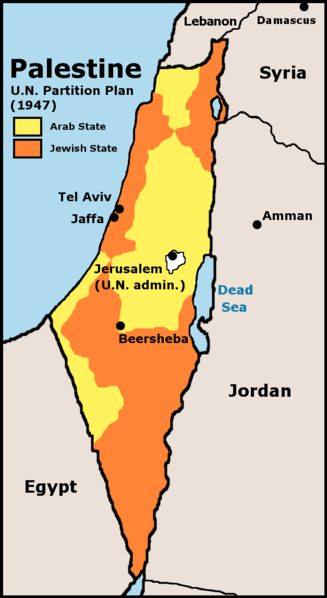
From reading the papers and hearing the news accounts, one gets the impression that we are living in a time of great anxiety regarding the future of Israel. In fact, anxiety has surrounded the State since its inception, with the possible exception of the time immediately following the Six Day War in 1967. When the British were about to leave in 1948, and the surrounding Arab armies were gearing up for war, all the experts advised against declaring independence. There was no way, they said, that the tiny state-to-be could hold out against such overwhelming force. At the insistence of David Ben-Gurion, who would become the State’s first prime minster, independence was declared. As predicted, seven Arab states declared war the following day and invaded the new State of Israel. Again, the experts advised withdrawing to a tight defense line along the coast between Tel-Aviv and Haifa. There was no hope, they said, of the joke of a state granted by the United Nations partition plan prevailing. They were right about the partition borders being a bad joke. They were right about the plans of our enemies, but God and Ben-Gurion had other plans. Every town, every settlement was to be defended. Not only did the State prevail; it expanded. The Etzion Bloc and the Jewish Quarter of the Old City of Jerusalem were lost for nineteen years, but Israel fought its enemies to an armistice on all fronts, an armistice that held for nineteen years while Israel grew economically and absorbed the Jews expelled from Arab countries with little but the clothes on their backs – no sixty-year refugee problem there.

Now the experts are at it again. From the United Nations, Europe, Russia, and President Obama's administration, the voices are unanimous. Israel must negotiate with terrorists irrevocably committed to its destruction. A "two-state solution" is inevitable. Secretary of State Hillary Clinton assures the Arab world that the United States will energetically promote a two-state solution. This is the same Clinton who kissed Mrs. Yassir Arafat after the latter had accused Israel of deliberately infecting Arab children with Human Immunodeficiency Virus (HIV). Not a word of protest from Mrs. Clinton. The same administration proposes nearly a billion dollars in aid to rebuild Gaza, never mind that the money will go, like all money given to Hamas or the Palestinian Authority, into the pockets of corrupt officials or to bankroll terror attacks.

It should not surprise us that the nations of the world are ready to install a terror state on Israel's border. They foolishly think that by throwing Israel to the wolves they will save themselves. Sacrifice the Little Satan and the terrorists will turn away from the Great Satan. But even among Israelis there is an air of resignation and inevitability. Foreign Minister-designate Avigdor Lieberman of the nationalist Yisrael Beiteinu party supports a "Palestinian" State and, incredibly, is prepared to trade Arab-populated land in pre-1967 Israel to such a state in "exchange" for Israeli settlements beyond the "Green Line."

There is one ray of light illuminating the darkness. Purim (14 Adar) is the yahrzeit of Ha-rav Zvi Yehuda Hakohen Kook זצ''ל, son of the first Ashkenazi Chief Rabbi, Avraham Yitzhak Hakohen Kook. Shortly after I came back from Israel in 1974, I saw a wall poster in Boro Park (!) written by him. It was headed, in big bold Hebrew letters, "Lo taguru," – Do not be afraid. Having graduated Yeshivah of Flatbush, where all Jewish subjects are taught in Hebrew, I drank its contents in thirstily and had no trouble understanding it. The Rav's son proclaimed that none of the "territories" may be given away. Not a grain of sand. Not because it would be strategically foolish, though it would be. Not because our enemies would interpret any "concession" as a sign of weakness and act accordingly, though they would. Eretz Yisrael is God's land and it is assur – forbidden by the Torah – to give any of it to Gentiles once it comes into our possession. We were to proclaim that message to other Jews and to the world – urbi et orbi – unapologetically and without fear. I later learned that the Lubavitcher Rebbe זצ''ל said much the same thing to anyone who would listen. Later still, after studying the philosophy of Rav Kook on my own, I learned of the drasha given by R. Zvi Yehuda on Yom Ha-atzmaut of 5727 (1967), where he lamented the Israeli people's resignation to the loss of so much of Eretz Yisrael. Only three weeks later that drasha would be looked back on in wonder, for on the day after the hag the run-up to the Six Day War began. The Arabs had their plans – drive the Jews into the sea. The world had its plans – sit back and leave Israel to its fate. The entire Jewish world was fearful; Israel would be outmanned and outgunned, as always. But God had His plans. On that day, when the enemies of the Jews had hoped to defeat them, it was turned around, and the Jews defeated their enemies – whenever I read the Megilla and come to that pasuk, I think of 26 Iyar 5727, the first of those fateful days. Wars are supposed to take years; the one in which the United States is currently engaged has been dragging on for eight. This war took all of six days. Mi shama ka-zot – who ever heard of anything like it? When it was over, Israel had quadrupled in size and Hevron, Shekhem, Yeriho, all the places whose absence from the State R. Zvi Yehuda lamented, were in Jewish hands for the first time in 2000 years. The world stood dumbfounded. The Jews had light, joy, gladness and honor – until one faithless government after another squandered what should have been the run-up to the final ge'ula.

So, lo taguru. Do not be afraid. President Obama, Secretary Clinton, the United States, the autocrats in the Kremkin, the Arab oil barons, - what they say does not matter. They only think they're in charge. We are to heed the One who really is in charge. Shine the light of R. Zvi Yehuda Kook first on our own people, then on the world. Let it chase away the darkness. There is no occupation. Eretz Yisrael – all of it – is ours. Irrevocably ours. Not by the generosity of the nations but from the Hand of God. You do not occupy your own territory. You do not annex your own territory. You settle it, build it and make it flourish. The world's two-state solution is really a three-state solution. There already is a "Palestinian" state. It's called Jordan and it sits on 80% of mandatory Palestine. Golda Meir was right; there is room for only one state between the river and the sea, and that state is the Jewish State of Israel. If the Arabs there wish to be citizens of Jordan, that can be worked out. If they want to rename Jordan Palestine, we won't stand in their way. If America wants to pour a billion dollars down a rat hole, let it pour the money on AIG and Citigroup. But Eretz Yisrael is not up for sale, barter or exchange. It is ours and ours forever. We have the Word of God on it, and we can take that to the bank. The banks have been lending money lately on a whole lot less.

Labels: , , , , , , , , ,

Sunday, January 04, 2009

For Hamas - A Flood of Fire

A flood of water you won't bring, but a flood of fire you will - Bereshit Rabbah

Noah's flood came to the world because it was "full of hamas." The word has been translated as corruption, violence, lawlessness and words of that ilk. Rashi calls it gezel - robbery. The current regime in Gaza certainly fills the bill. Their government, if you can call it that, has been utterly corrupt, violent and lawless. Hamas exists for one reason only - not to make life better for the people of Gaza but to destroy Israel. It makes no secret of its raison d'etre. Three years ago Israel handed Gaza to Hamas on a silver platter and what did it get in return? Daily rocket attacks on Sderot, and now as deep as Beersheva. Hamas is, as New York City's Mayor Mike Bloomberg put it, a wholly owned subsidiary of Iran. Iran is supplying Hamas with longer range missiles, smuggled in through tunnels from Egyptian Sinai, and is training Hamas operatives in their use. The only thing surprising about this is that anybody is surprised. Should Hamas suddenly get the warm and fuzzies for Israel now that they have a territory to govern? Of course not. When you show evil men that evil pays off, they intensify their evil. Finally, Israel decided that enough was enough, and set out to put an end to Hamas' attacks. Predictably, the world is outraged - not at Hamas but at Israel. Disproportionate! Civilian casualties! Suffering Palestinians! Not a word about Israeli civilians deliberately targeted by the beasts from Gaza. As usual, the world is cool with suffering weak Jews, but when we are strong and use force to defend ourselves, oy vey. And what would the United States, France, Russia or any nation on earth do if its population was subjected to daily lethal fire from across a hostile border?

What you won't find on the front page of the New York Times or in pronouncements emanating from the United Nations or the "Quartet" is that Israel, true to form, goes far out of its way to avoid civilian casualties and to alleviate the suffering of Arabs in Gaza. I never cease to be amazed at how Israel is willing to sacrifice its own soldiers and civilians to spare those of the enemy. Before bombing an area, they warn residents to leave. Of course, that tells Hamas to move their rocket launchers elsewhere, so that attacks on Israel's population centers actually increase. The folly of Lebanon 2006 is repeated. Humanitarian aid - food, medicine and such - is shipped by Israel into Gaza - all while a war is going on! Never mind that most of it will doubtless find its way to Hamas' "fighters," and not to the poor suffering Gazans that Hamas uses as human shields. Can you imagine the United States sending food and medicine into Tokyo or Berlin during World War II? The Israelis have gone mad! They say that Arabs in Gaza are not the enemy, that in fact they are victims of Hamas as much as the citizens of Sderot, and now Ashkelon, Ashdod and Beersheva. Nonsense! Who put Hamas in power by as democratic an election as there could be in any Arab country? Who allows Hamas to put rockets and other military assets in schools and private homes, so that when Israel attacks civilian casualties are unavoidable? The entire population of Gaza is Amalek. All are culpable, just as the entire German population aided and abetted Hitler and deserved whatever befell them and then some.
Instead of doing everything in its power to minimize the population's suffering, Israel should put the fear of God in the Arabs of Gaza, impressing on them in the only language they understand that cooperating with Hamas is bad for their health. It should be making life for Arabs in Gaza so miserable that many will be motivated to leave the country.

Israel does seem to have learned a lesson from the debacle in Lebanon and from America's experience in Iraq: Air power prepares the battlefield but only boots on the ground and plenty of them can secure it. Ground troops are entering the vipers' nest that is Gaza City and the surrounding refugee (for 60 years!) camps. Ferreting out Hamas' men, rockets, launchers (very small and portable) and other equipment by going house-to-house will no doubt be costly in Israeli lives. The alternative is a public relations nightmare, but one I would prefer to a slow slog through unfamiliar and hostile back alleys. War is not an exercise in public relations, and is to be resorted to only when all other alternatives (short of national suicide!) are exhausted, as they are here. When war is necessary, you have to go whole hog. If any house, school or hospital in Gaza City can contain weapons aimed at Israel, then Israel may, and perhaps must, do a Dresden on Gaza City. Flatten the place. Burn it to the ground. Leave not one stone on top of another. Bake Hamas' men in the smouldering ruins of their city. Then send in the troops to mop up, dispose of the corpses and clear the remaining weapons. To paraphrase British Air Marshall Arthur Harris, all of Arab Gaza is not worth the life of one Israeli soldier. Hamas will have brought on itself a richly deserved "flood of fire."

And then what? When Gaza was liberated in 1967, Prime Minister Golda Meir announced that Gaza was a dagger pointed at Israel's heart and could never be given away. She was not known as "the only man in the cabinet" for nothing. Foolishly, Israel did give it away - and look what it got in return. Now Israel protests that it does not want to return to Gaza, only to destroy Hamas' operational capability. But what do they think will happen as soon as they leave? Hamas will rebuild, with the help of its sugar daddy Iran. Just like Hezbollah did in Lebanon. What would Germany and Japan have done if the victorious Allies had left them to their own devices? Return permanently is just what Israel has to do, and the displaced Jews of Gush Katif will be only too willing to go back and make the place bloom like they did before 2005.

And we? As happens whenever Israel goes to war, we are feeling frustrated. We want to help, but don't know how. Some suggestions:
1. With God's help, nothing is impossible. Say extra Tehilim (e.g. 20, 27, 83, 121, 130).
2. If you have a child studying or volunteering in Israel, do not beg him to come back. His/her place is there.
3. If you were planning a visit, go through with it. No one can guarantee that you will not come to harm, but no one can guarantee that in Brooklyn either. I traveled all over Jerusalem without incident but got mugged on my own block. If a place is particularly dangerous, the Israeli police and military will seal it off, so you might not be able to ride to Kever Rahel and Hevron in that armored bus.
4. Any number of charities funnel our tax deductible dollars to where they are needed most. Among them are:
Magen David Adom
Friends of Israel Defense Forces
A Package From Home
Pizza IDF (honest, they deliver pizza to isolated army units)
5. With Israel's resources stretched to the limit, hasbara has to take a back seat. Articulate, educated Jews like us can take up the slack. Attend demonstrations, write letters to the media, and when the casualty figures and ugly scenes appear on the television news, remind the squeamish of the casualty figures of World War II and the tactics used, and of what the world would be like if God forbid the other side (sitra ahara) had won.

May this be the last of Israel's wars and may next year see us celebrating with Mashiach in the rebuilt Beit Hamikdash.

Labels: , , , , , , ,

Friday, October 10, 2008

Stop the Clock

I am a proud member of the United Federation of Teachers, the union representing New York City's public school teachers. The following scenario often plays out in labor negotiations. The union has a strict "no contract no work" policy, an agreement is in sight, nobody wants a strike and the deadline is a few mintues away. Both sides agree to "stop the clock" and keep talking. The next morning everybody wakes up to the news that a contract was reached and there will not be a strike.
Something similar happened at the Kingsway Jewish Center yesterday, Yom Kippur. Services were taking longer than expected. We had an hour or less for Ne'ilah. The rabbi led the services instead of the hazan, perhaps in an effort to finish before the fast ended at 7:11. It didn't work; when the "deadline" came we were deep into Selihot. What to do? We stopped the clock. If anybody was angry that the fast was over but Ne'ilah was not, nobody said anything. Few men got up and left. We were absorbed in davening to the extent that we weren't paying attention to our hunger, much like runners in the last mile of the New York City Marathon not noticing their fatigue for all the cheering. The final teki'ah gedolah sounded at about 7:30, followed by a spirited hand-clapping round of Leshanah Ha-ba'ah B'Yerushalayim, followed by Ma'ariv and only then did we go home. Of course, we don't know what kind of "contract" was reached. But we "went the extra mile" (sorry to borrow a metaphor from what Christians call the New Testament), asking Hashem to do the same for us.

May we all have a happy and healthy new year. May we see only good things for ourselves, for Israel and for the Jewish people. The next teki'ah gedolah that we hear will be sounded on the night of Yom Ha'atzma'ut; the end of Ma'ariv being modeled after the conclusion of Yom Kippur. It is also followed by joyous singing of Leshanah Ha-ba'ah B'Yerushalayim. This year, may the shofar be blown by Mashiah on the roof of the rebuilt Beit Hamikdash, televised live via satellite for all the world to see and hear.

Labels: , , , ,

Friday, August 15, 2008

You were shown to know

In last week's Parsha (Va'ethanan), in the part that is also read on Tish'a B'Av (the first paragraph of which I read in a low voice when I'm the ba'al korei), Moshe Rabbeinu is addressing the people for the last time, reviewing the events of the last 40 years. He utters a famous phrase that we read at the Hakafot on Simhat Torah, and that Sefaradim recite every Shabbat when the Sefer Torah is taken out of the Aron Kodesh: Ata horeita lada'at ki Hashem hu ha-Elokim ein od milvado. You were shown to know that Hashem is God and there is none beside Him. The Avot were told, and had to believe in Hashem's promises for their descendants, but those Moshe Rabbeinu was addressing were shown, and therefore knew. Some were children and teenagers in Egypt, and experienced God's intervention in human affairs first hand with Yetzi'at Mitzraim, at a very impressionable time of life (see also previous post). Even those born in the wilderness saw first hand the manna, the traveling well, the clothes that were neither outworn nor outgrown, the feet whose soles remained baby smooth despite constant walking.

Much ink is spilled over the need to believe in God and in His omnipotence, even when we are not given much reason to believe, and we have plenty of what appears to be evidence to the contrary. Throughout Inquisitions, pogroms and the Holocaust Jews have believed, even though it would have been so much easier, and seemingly more sensible, to give up on being Jewish. I am reminded of a story I heard about a religious Jew in a concentration camp. Hanukkah was approaching and he scrounged and saved bits of margarine day by day, so that when Hanukkah came he would have enough to light one Hanukkah light. Hanukkah - the holiday when we celebrate Jewish sovereignty and freedom to be Jews - in the pit of hell. And this Jew was concerned about lighting the candle. He believed - even though he had every reason in the world not to. (As an aside, had he asked a halakhic question of a poseq about whether to save the margarine, the answer would almost certainly have been no. When you're starving in a concentration camp and you can get a bit of something edible, you have to eat it and not burn it.) Three years later - the State of Israel was re-established and the significance of Hanukkah becomes crystal clear. No need to believe. Ata horeita lada'at. We were shown. We know.

In 1967 Israel was surrounded by enemies armed to the teeth, poised to drive it and its Jews into the sea. We were all afraid, and the religious were praying and fasting. Then came the smashing victory, the destruction of our enemies and the liberation of Yerushalayim. No need to believe that Hashem was with us. We were shown, and we knew. Hashem was in charge, and nothing in the world happened independently of Him. And what effect did all that have on us, after the initial euphoria abated? We still agonize over whether to wear our kippot to work or to job interviews, sometimes even whether to wear them on the street. People are incredulous when they hear that I wear my kippa in the public school classroom where I teach. Too many Orthodox colleagues do not wear it. Israel suffers a high profile terrorist attack, and Christian pilgrims still visit but Jewish tourists stay away. Israel's leaders fall all over themselves appeasing bloody terrorist murderers, as if God was not in the picture. A downturn in the business cycle (capitalism, to paraphrase Winston Churcill, being the worst economic system on earth except for all the others) and we all go into a panic, as if no one was in charge. Ata horeita lada'at. We were shown. So why the anxiety? Why the defeatism? Are we ever going to learn to take yes for an answer?

Labels: , , , , , , ,

Sunday, June 08, 2008

Yom Ha-bikkurim

We are about to celebrate Shavu'ot, and many of us will stay up all night learning Torah. Tomorrow we will hear the Ten Commandments in shul, and refer to the holiday in the Amida as "z'man mattan torateinu" - the time of the giving of the Torah. But if we look in the Torah shebikhtav, there is no mention of Shavu'ot as commemorating the giving of the Torah. Torah was supposed to be as fresh and new every day as the day it was given. And indeed, Shavu'ot is the only holiday that does not have a fixed date on the calendar. It is celebrated seven weeks after the second day of Pesah. Before the adoption of a fixed calendar in the fourth century C.E., each month had either 29 or 30 days depending on when witnesses saw the new moon in Jerusalem; one never knew in advance how many days a month would have. Depending on whether Nisan and Iyar had 29 or 30 days, Shavu'ot could come on the fifth, sixth or seventh of Sivan. The seventh is the day of Mattan Torah only according to R. Yosi, and the fifth is not the day according to anybody!
The holiday is charcacterized in Torah shebikhtav two ways: Shavu'ot, since it occurs seven weeks after Pesah, and Yom Ha-bikkurim, the day when the first of the wheat crop was brought up to the Beit Ha-mikdash and given to the Kohanim. The Mattan Torah angle apparently is post-exilic, a cultural accretion that developed when we no longer had a Beit Mikdash and therefore could not bring Bikkurim.
Shavu'ot is also referred to in the Mishna is Atzeret, a conclusion. Just as Sh'mini Atzeret is the conclusion of Sukkot, Shavu'ot is a conclusion of Pesah. We've all heard, and most of us will hear again tomorrow or the day after, drashot explaining that the purpose of yetzi'at Mitzraim was fulfilled with Mattan Torah seven weeks later. Freedom without law is not freedom but chaos. Without detracting from this explanation, I would like to offer an additional one. As slaves our lives were not our own; we did what our masters told us to do when they told us to do it. Even our food was dictated by our masters, who set a pot of food in front of us the way one would feed animals (see the commentaries on sir ha-basar, the fleshpots of Egypt). The fruits of our labor belonged not to us but to our oppressors. As free men, our lives would be very different. We would have our own country, work its soil, and enjoy its produce. The temptation to attribute our success to our own efforts - kohi v'otzem yadi (see Parshat Eikev) must have been strong. Therefore, we were commanded to take the first fruits of each year's crop, bring it up to the Beit Ha-mikdash, and recite a confession which became the basis of the Haggadah Shel Pesah [see the beginning of Parshat Ki-Tavo]. But the Haggadah stops in the middle, after the miraculous deliverance from Egypt. The remaining verses are not read at the Seder: And He brought us to this place, and He gave us this land flowing with milk and honey. And now I brought the first fruits of the land that You, Hashem, gave me, and he [the one who brings the Bikkurim] shall leave it before Hashem your God and He shall bow down to Hashem your God. And he shall rejoice in all the good that Hashem your God gave you and your house. . . . Shavu'ot becomes the conclusion of Pesah, in that we confim our freedom by thanking Hashem for the privilege of working our soil and eating its produce, and acknowledge that our material success comes from Hashem! Is this the same people that developed a culture of parasitism where working for a living is denigrated and the ideal is to study Torah full time and live off the labor of others? If I had my druthers we would be reading Parshat Ha-bikkurim on Shavu'ot along with the Ten Commandments.

The Bikkurim were to be brought up in a basket, in Hebrew not the usual sal (as in kadursal, basketball), but a tene, a word that sounds Egyptian. A tene held things. It resembles a Latin root meaning "to hold," i.e. tenir in French. In English the word "tennis" originates from the racket that a tennis player holds in his hand, and Cold War defeatists told us that West Berlin was untenable, we couldn't hold onto it. I wonder if the Hebrew-Egyptian and Latin words are related, or if they simply resemble each other by accident. At any rate, in a good year the contents of a tene must have been heavy, and it had to be held in the hand at least the final few hundred meters to the Beit Ha-mikdash. Shavu'ot - Yom Ha-bikkurim was no holiday for Jewish weaklings!
Let us pray that we will soon celebrate Shavu'ot as we were commanded, as normal Jews in a normal country once did, with heavy baskets carried on strong Jewish shoulders to the rebuilt Beit Ha-mikdash, quickly and in our time.

Labels: , , , , , , ,